


Being a Project 3.18 Partner (a paid subscriber) entitles you to exclusive content, one of the ways we say thank you for supporting all the work that goes into this newsletter. In these bonus stories, we follow up, add on, or go in a whole different direction. In this edition we head south, to Springfield Illinois, where a start-up league is making quite the name for themselves.

What constitutes a “baseball name”? I still haven’t pinned it down. It’s more than just what a player has on their driver’s license; a good baseball name has snap, verve, intrigue, a special something that catches the eye or pleases the ear.
My go-to resource for baseball names is the downloadable dataset at Baseball Reference, a file containing biographical information on every major-league player in history and many minor-leaguers as well. The list encompasses all major leagues, not just the two that comprise Major League Baseball today. The recognized Negro Leagues are represented, as are the old American Association and the upstart Federal League. With a list of tens of thousands of players spanning 150 years, you can find nearly the breadth of human diversity in the list of baseball names. Anything, really—except women.
The most famous women’s professional baseball league, the mid-century All-American Girls Professional Baseball League is not recognized as a “major league.” Neither are the shorter-lived American Women’s Baseball League or Ladies League Baseball or the Women’s Adult National Baseball Association. Thousands of women pitching overhand from 60 feet, running 85-to-90-foot basepaths, using wooden bats, but none of them have made the list. This summer, a new professional women’s league is trying to force their way onto the pages of baseball history.
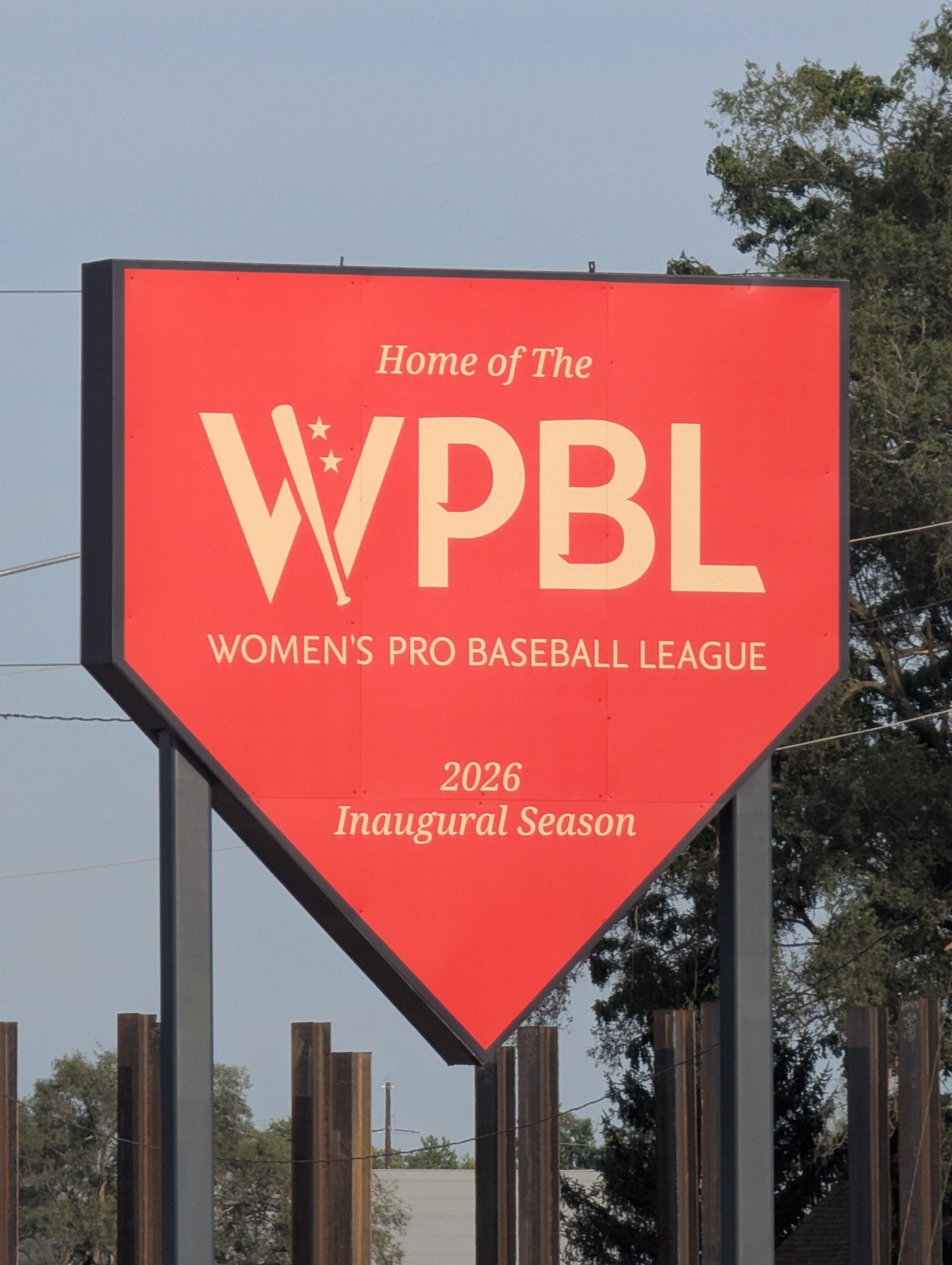
The Women’s Pro Baseball League consists of four teams, nominally aligned with four American cities, playing several dozen games out of Robin Roberts Stadium, the WPBL’s rented base of operations, in Springfield, Illinois. On Saturday, my family and I made the trip to see a game between the Boston Hunters and the Los Angeles Queens.
The Queens won, 10-6, but it never felt that close. Los Angeles batted around in the top of the first, punishing the Hunters’ early defensive mistakes. Boston made two errors and starting pitcher Alli Schroder issued three walks in stifling conditions (Springfield was still above 85 degrees after sunset). Los Angeles scored six runs before Boston made an out, and when the inning ended the score was 8-0 and Schroder was pulled with 50 pitches. Both teams contributed to a hitting exhibition that night, spraying balls all over the park and moving aggressively on the bases without being reckless. Several players shined, and everyone looked like they belonged.
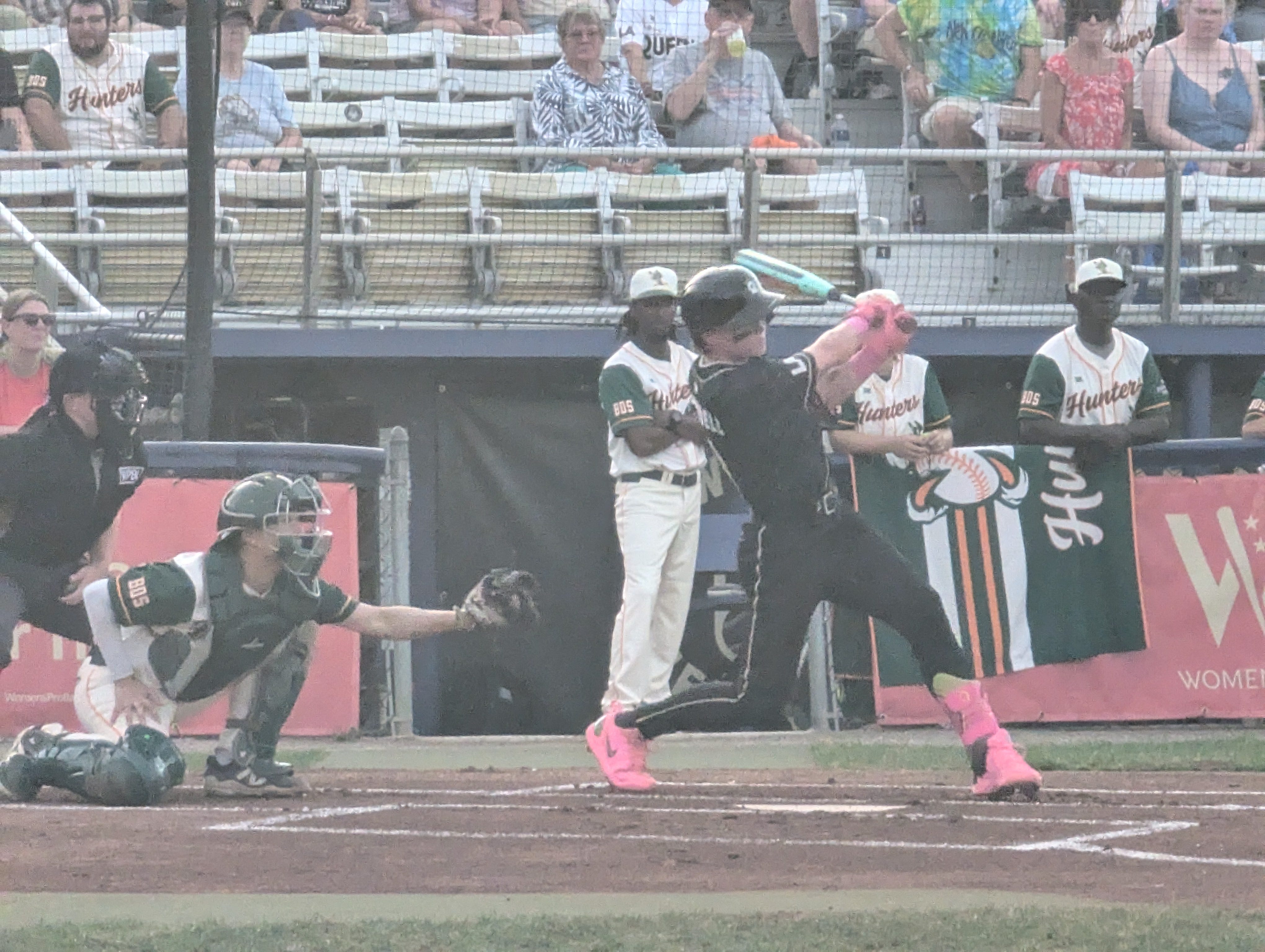
The WPBL has offense figured out. It is overly simplistic to say that batting is the same in softball as it is in baseball, but it’s clearly close enough, and there is a deep pool of women who can hit. On pitching and defense, however, there is work to be done. The larger dimensions of a baseball field demand instant reactions from defenders, and on many occasions the outfielders seemed just a step or two behind the balls dropping in for hits. And the pitchers who have made it this far have come essentially on their own. The professional development pipeline for women baseball pitchers in the United States—as distinct from softball pitchers—is practically nonexistent. A significant number of Japanese pitchers and others from around the world are filling in the ranks, but as the WPBL inaugural season ends, of the 11 pitchers with more than 15 innings pitched, only one has an ERA under 3.50. More on her in a moment, but in general the WPBL has an arm problem.
As a dabbler in baseball history, I was struck by how much the WPBL game I watched had in common with early baseball in the late 1800s, when the pitchers didn’t throw as hard, defensive miscues were much more common and high-scoring games were common. And that makes sense, doesn’t it? Those men were professional players only a few months every year, playing without the benefit of decades of development and specialization that future players would have. The first professional baseball players had to play their way into excellence. Well over 100 years later, the WPBL players have done the hardest part. They’ve started something great—which might one day be excellent—and given us a whole new set of “baseball names” that already are.
Here are a few of my favorites.
Boston Hunters
Boston has the best uniforms in the league and it’s not close. Big 1990s energy and look at this alternate logo: