


Welcome to Project 3.18, where a fan-first writer tells strange and surprising stories from baseball history and culture.
If you enjoy what you read today, please subscribe to receive our free feature stories in your inbox. And if you’ve been here for a while, we could really use your support as a paid subscriber. Paid subscribers receive access to exclusive content and help keep this publication going and growing.
Going into the 1986 National League Championship Series, the New York Mets knew they had one card to play against Mike Scott. Only four batters into the first game of the series, catcher Gary Carter laid it on the table.
Carter had watched from the on-deck circle as first baseman Keith Hernandez struck out swinging. Not many pitchers could make the 1979 co-MVP look foolish at the plate, but Scott’s diving, dipping pitches easily evaded Hernandez’ hunting bat.
Now it was his turn. Carter swung over strike one, a darting pitch that fell off so steeply he ended up swinging at the wrong place entirely. He grimaced. Scott came set, but this time Carter had no plans to swing. He followed another waterfall pitch all the way into catcher Alan Ashby’s mitt. Umpire Doug Harvey called it strike two.
Carter turned to the umpire and raised his hand:
“Harv—no way.”
Harvey knew Carter wasn’t protesting his strike call—he was protesting the legitimacy of Scott’s pitch. Carter wanted the umpire to check the baseball. “I turned it over one way,” Harvey said. “I turned it over the other way.”
Harvey’s examination showed a white cowhide sphere with red seams and 88 red stitches, stamped with the name and signature of Chub Feeney, the president of the National League. “The ball was as clean as this desk,” Harvey said, seated at a press conference a few days later, recalling the series’ inciting moment. He threw it back to Scott. Now it was Carter’s turn to strike out swinging.
“The bottom dropped out of that ball,” Carter said. “That’s why I asked Doug Harvey to look at it. After that, I didn’t bother. Every ball I saw tonight moved. There was nothing straight. Every pitch was doing something.”
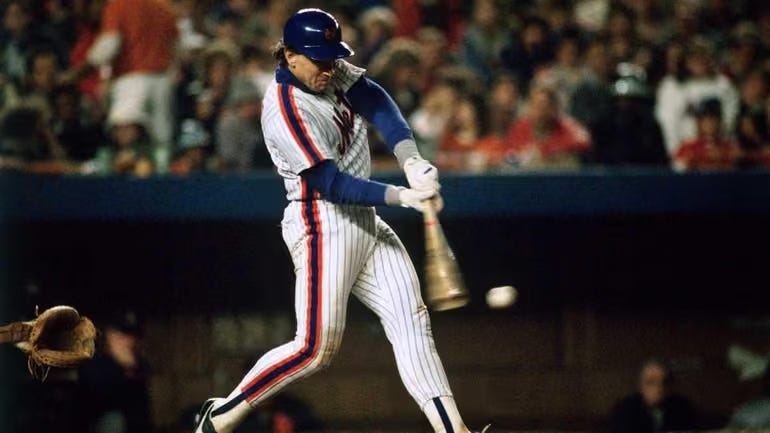
Carter, one of the most vocal and visible among a team of strong personalities, didn’t care about the boos he received for asking the ball be checked. “That’s because I was the one who said something about it. But there are a lot of other guys around who think it.”
At the end of 1984, Mike Scott, age 29, looked about done. That season, his second with the Astros and the worst of his six-year major-league career, Scott posted a 5-11 record with a 4.68 ERA and recorded only 84 strikeouts. Scott had one serviceable pitch, a fastball, but without anything to play it off of, it wasn’t fast enough.
“There was no guessing,” Scott recalled of those years. “Well, [the hitters] were guessing, but they’d guess fastball and they’d get one. If you get behind 2-1 or 3-1 and they know the fastball is coming, even if you throw 95, they’re going to hit it harder than you throw it.”
Two years later, in 1986, the same pitcher, so recently circling the drain, was one of the best performers in major league baseball. Scott won 18 games, recorded an ERA of 2.22, and struck out 306 batters. The latter two numbers led the National League.
The difference, Scott insisted, was a second pitch, a split-finger fastball, which he had learned prior to the 1985 season, when his rebound began. He’d explained the pitch’s remarkable movement to reporters a hundred times, but Gary Carter’s nationally televised objection obliged him to do it again, with a little shade mixed in: “It’s a backdoor pitch. If the hitter gives up on it, it can come back and bite the outside corner.”
That oft-repeated explanation didn’t satisfy some National League hitters. They contended no one pitch could turn a 1984 Mike Scott into a 1986 Mike Scott. A transformation of that magnitude required a miracle—or quick trip to the hardware store. Cynics believed the journeyman-turned-All-Star had added fine-grain sandpaper to his repertoire. According to the doubters, Scott was scuffing up the baseball, creating a patch of rough surface or a loose stitch that added unpredictable movement to his straightforward pitches.
These accusations had flown since 1985, when the Chicago Cubs found a piece of sandpaper near the Wrigley Field mound during one of Scott’s newly impressive starts. A year later, as Scott began putting together what would eventually be a Cy Young-caliber season, the Cubs, the Padres, and the Giants all publicly accused him of scuffery. Ball after ball was checked, and ball after ball was returned to Scott, who kept getting better and better. On September 25, 1986, Scott clinched the NL West division for the Astros by throwing a no-hitter.
The prospect of facing the Astros in a playoff series made even the league-best Mets uncomfortable. Even though New York had the most loaded offense in baseball and won 108 games that year, Houston had Scott and Nolan Ryan. In a best-of-seven series, both could be expected to pitch twice, and one might start three times. It was clear which of the Astros’ co-aces caused the Mets most concern—just listen for the complaining.
“All of a sudden, [Scott] has turned into a 300-strikeout pitcher,” Carter said two days before the series began. “There has to be some reason. Sure, he’s talented, and he developed a split-finger fastball. All in all, though, I think he’s had a little help from a ‘friend.’”
As the Mets’ primary catcher, Carter had batted against all the split-finger fastball pitchers in the league and caught Ron Darling, who threw one himself. “Scott’s ball has a very funny movement,” Carter said. “I’ve never seen a ball dip like that.” He’d even caught Scott during the All-Star Game, when the pitcher threw something that “dropped four feet.” Carter said he’d looked at that ball and found it “marked up.”
Perhaps all that was true; it was also true that Scott’s official record was clean. No umpire had ever found a ball defaced beyond a reasonable doubt. Doug Harvey had officiated five of Scott’s starts that season and never seen cause for a warning, and he wasn’t going to give the Mets any help in the playoffs. They were stuck with Mike Scott and his magic splitter, which looked like a knuckleball traveling at 90 miles an hour.
He didn’t give up a hit until Keith Hernandez singled in the fourth inning. The Mets’ most professional hitter struck out in his other three at-bats. In the sixth, Hernandez gave Harvey an earful on a called strike that (replay confirmed) was out of the zone. After a swinging strikeout during his final at-bat in the eighth, Hernandez tossed his bat back in the direction of the Mets’ dugout in disgust.
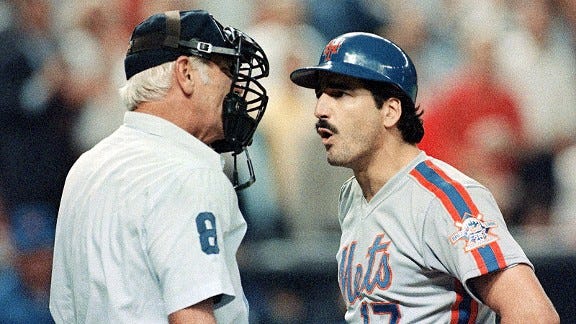
“On that at-bat [Scott] threw me four fastballs, up and in,” Hernandez said. “He was like a robot. He reached back for something extra when he needed it. That’s the sign of a great pitcher. He just beat me.” Hernandez, Carter, and Daryl Strawberry, the heart of the Mets’ order, struck out a combined eight times.
Scott was ahead of the hitters all night. “Then you have to hit his pitch,” left-fielder Mookie Wilson said. Wilson battled Scott in the ninth, fouling off six straight pitches before managing a sharp grounder that Astros first baseman Glenn Davis saved from his knees. “That at-bat, he threw me a lot of those whatever you call them, split-finger fastballs, forkballs,” Wilson said. The one he managed to hit was “some kind of wicked drop.”
Meanwhile, Dwight Gooden was hanging in there for the Mets. Early on, Gooden looked shaky but kept reaching the pitcher’s spot in the order when he needed it: Twice the Astros had the bases loaded with two outs when Mike Scott batted and struck out. The only mistake Gooden paid for was middle-middle fastball that Glenn Davis (nickname: The Milkman) hit for a home run in the second inning. That wound up being the only run scored in the game. “I didn’t think [one run] would hold up,” Davis said of the Astros’ first-ever postseason home run, “but Mike Scott slammed the door on them.”
When it was over, Scott had struck out 14 Mets, setting a new NLCS record. He now had a streak of 24 straight scoreless innings at the Astrodome. “I was pretty much in the groove,” he said—a Freudian slip, perhaps? “Now I’ve just got to work on not coming up with the bases loaded.”
Carter was ready to move on. “I tip my hat to [Scott]. He gets away with it.” But some of his own teammates, speaking on background, saw Carter’s “check” call as a white flag the team didn’t need, especially so early in the game:
What if Scott is doing something to the ball? What if he is? What are you trying to prove? I like Gary, I really do. Good guy, great player. But what the hell was the point? Be a man. Don’t come out of the box whining.
He was beaten before he started. He completely psyched himself out. He made up his mind he was going to hit the split-fingered—and you’re not going to hit the split-fingered.
Trying to offset a clubhouse full of dramatic (and talented) players, Mets manager Davey Johnson was tactful. “Mike Scott pitched a great ball game and Dwight pitched a good one,” he said. At least Scott’s turn in the rotation was over and the Mets could get back on track against…Nolan Ryan, already the all-time strikeout leader.
Ryan had struggled early in 1986. He had a sore elbow and a 5.21 ERA, but the elbow had healed. Ryan won 9 of his final 11 starts of the year and struck out 135 batters in 109 innings.
“He doesn’t throw a split-finger, does he?” Johnson asked. “He just throws a 98 mile-an-hour heater, right?”
In the beginning, a pitcher was a hitter who could throw the ball with force and accuracy, and he threw hard and straight. Then Jim Creighton thought up the untamed spinball. And then Candy Cummings made the ball curve. Now it was an arms race. The spitball reared its slippery head. The slider became popular some time around the second World War and Tom Seaver and Steve Carlton made sure it stuck around. The changeup, the cutter, the sweeper—every pitch with a name began as someone’s wild idea.
The iconoclast behind the split-fingered fastball was the man who taught it to Mike Scott: “God bless Roger Craig,” Scott said in the summer of 1986.
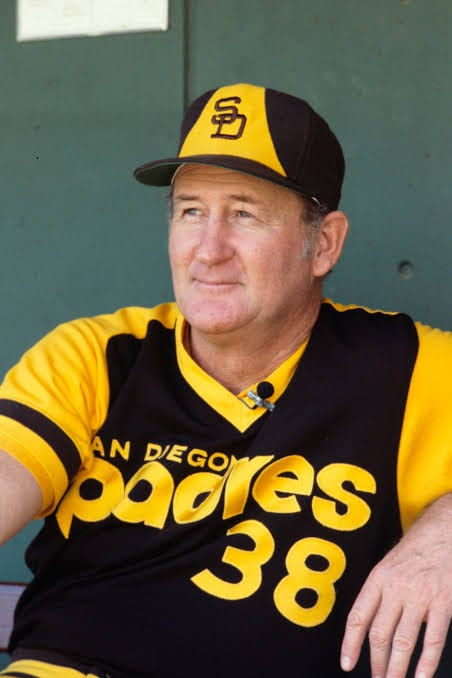
Roger Craig was a capable pitcher who did solid work for various teams between 1955 and 1966. Unfortunately for Craig, his claim to fame as a player is probably his two seasons with the expansion New York Mets. He pitched pretty well, but his hapless teammates saddled him with 46 losses over two seasons. After retiring as a player, Craig moved into a career as a coach and later a manager. In the mid-1970s he was a coach for the Astros and the San Diego Padres, giving him ample opportunity to watch the Cubs’ phenom reliever, Bruce Sutter, throw a nasty-looking pitch.
It wasn’t entirely unfamiliar. “When I was still pitching,” Craig said, “guys like Elroy Face, Lindy McDaniel, and Diego Segui threw the pitch and it was called the forkball.”
The forkball had been around since the 1910s (Joe Bush of the Athletics and Red Sox is credited with its invention), but Sutter wasn’t following Bullet Joe’s method precisely. Like the forkball, his pitch was thrown with the ball wedged in between the first and second fingers, but he gripped the ball more shallowly and threw it harder. It looked like a fastball until it was too late.
Sutter learned the pitch that would become known as the split-finger fastball from Fred Martin, a minor-league instructor in the Cubs’ organization. Recovering from surgery to address a pinched nerve in his arm, Sutter had found himself in need of something to offset a loss in velocity, and Martin made a suggestion that worked out pretty well.
Craig said he approached Sutter to get a closer look at this modified forkball. “I asked him how to throw it, but I could never learn the way he teaches it. Sometimes I wonder if he wants anyone to know.” Bruce Sutter had a split-finger worthy of Cooperstown, but the most talented don’t always make the best teachers. Craig wanted to teach, but first he had to learn.
In 1978, Craig became manager of the Padres. In an offseason baseball school he ran for younger players, Craig kept tinkering, seeking a breaking pitch that wouldn’t wreck 14- and 15-year-old arms. The group went back to the forkball and what Craig had picked up on the splitter. “I had them spread the two fingers that grip the ball, hold it along the seams, and throw a fastball.”
The result, Craig said, was pretty close to Sutter’s pitch and surprisingly easy to teach. Any pitcher with big enough hands and a major-league caliber overhand fastball could learn it. Craig said the pitch was good enough to make him think about a comeback, but, at 56, “I was a little too old.”
Craig’s managerial duties with the Padres kept him from doing much with his reverse-engineered splitter, but he was fired after a down season in 1979. Sparky Anderson swooped in to hire him as the pitching coach for the Detroit Tigers and soon the splitters were flying. Craig said his first major-league acolyte was pitcher Milt Wilcox. “He’d be pitching a shutout and give up a three-run homer on a slider. I told him, ‘You got to do something different. I’m going to teach you a different pitch.’ [In 1984] he won nineteen games and the World Series.”
Jack Morris picked it up. In 1983, Morris doubled his strikeouts from the previous year and won 20 games. Craig oversaw a Tigers staff which improved their collective ERA from eleventh place in the American League in 1980 to first place in 1982. Anderson dubbed him “the best pitching coach in baseball.”
By 1984, Craig’s splitter was the “it” pitch of the decade, with a record of reviving flagging careers and Craig passing the technique on to anyone who was curious. He never claimed to be the inventor of the pitch, “I just discovered a better way to teach it.”
After his disappointing 1984, Mike Scott began mentally preparing for the end of his time as a major leaguer. Against the likes of Keith Hernandez and other elite hitters, his fastball alone could not cut it. “It was a desperate time,” he recalled. He was at his lowest when the Astros’ management suggested he go see Roger Craig. Scott readily agreed. “If you had as bad a year as I had, you’d go try anything.”
The split-finger guru had requested a raise from the Tigers for 1985, but the team had declined to pay “the best pitching coach in baseball” the best salary. Craig, feeling disrespected, chose to retire to a ranch he owned in San Diego County. He was the baseball equivalent of a hermit master in a kung fu movie, withdrawn from the world but open to visitors and willing to share his teachings with anyone who vowed to use them against his doubters. Less than a month before spring training, Mike Scott appeared at his door.
“Roger was great,” Scott recounted in 1986. “We went over to Grossmont Junior College in San Diego and after watching me throw he said my mechanics were fine.” Those preliminaries dispensed with, Craig said, “Today we’re going to talk about the pitch.”
Over the next 10 days, Scott threw fastballs while spreading his first and second fingers further and further apart and moving his thumb up the side of the ball. That was all it took, Craig said. “You just aim it right down the middle of the plate and let it go.”
Scott was amazed at the results. Sometimes the splitter darted down and in, other times down and out. Craig warned him his delivery had to match how he threw his four-seam fastball. “That’s the key to it, throwing it like a fastball. That’s what deceives the hitter.”
Scott took to the splitter as well as any pitcher Craig had ever taught. With nothing to lose, Scott said, “I could tell I was going to use that pitch quite a bit.”
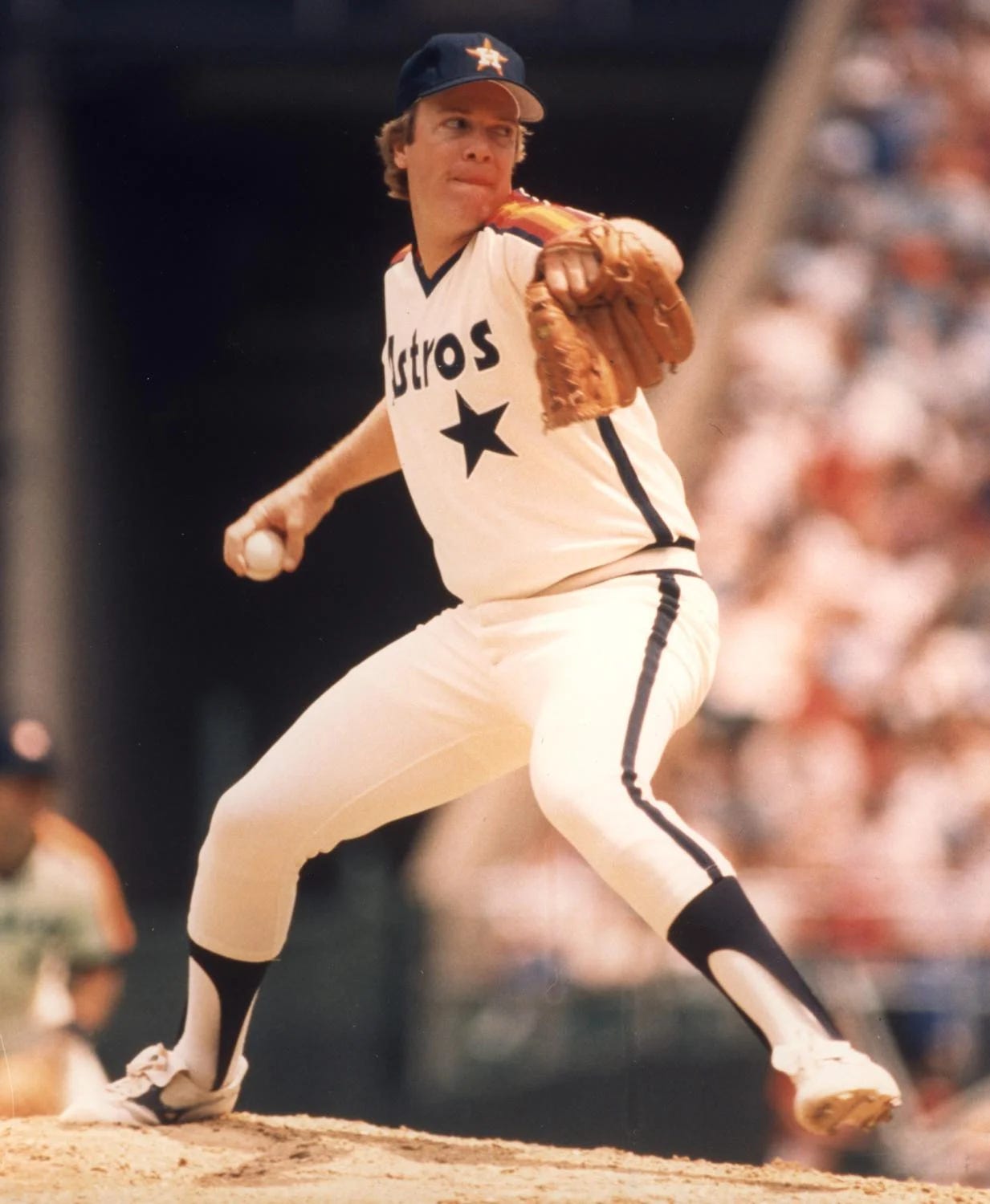
He’d never had a spring training like the one he had in 1985. “Right away, people were swinging at pitches that were bouncing in the dirt. I’ve never been a strikeout pitcher, but all of a sudden I’m getting ahead of the hitters with the split-finger and striking them out with the fastball.” The results carried on into the regular season. His strikeouts nearly doubled. His ERA dropped by nearly a point and a half.
It all seemed too good to be true, and before he left Craig’s tutelage, the old master had warned Scott that this was exactly what some people were going to think:
“You’ve got to watch out. The ball is going to be doing things people haven’t seen it do before. You’ll probably have people screaming at you, but that’s great.”
By the summer of 1986, things were going better than Craig or Scott could have dreamed. He had more strikeouts than Fernando Valenzuela, more than Roger Clemens. He was a bona fide Cy Young candidate with a story that gave hope to also-ran pitchers everywhere.
Roger Craig’s warning that the doubters and haters would eventually come for Scott proved quite accurate. In August 1986, an outraged rival manager publicly accused Scott of scuffing the baseballs to generate illegal movement.
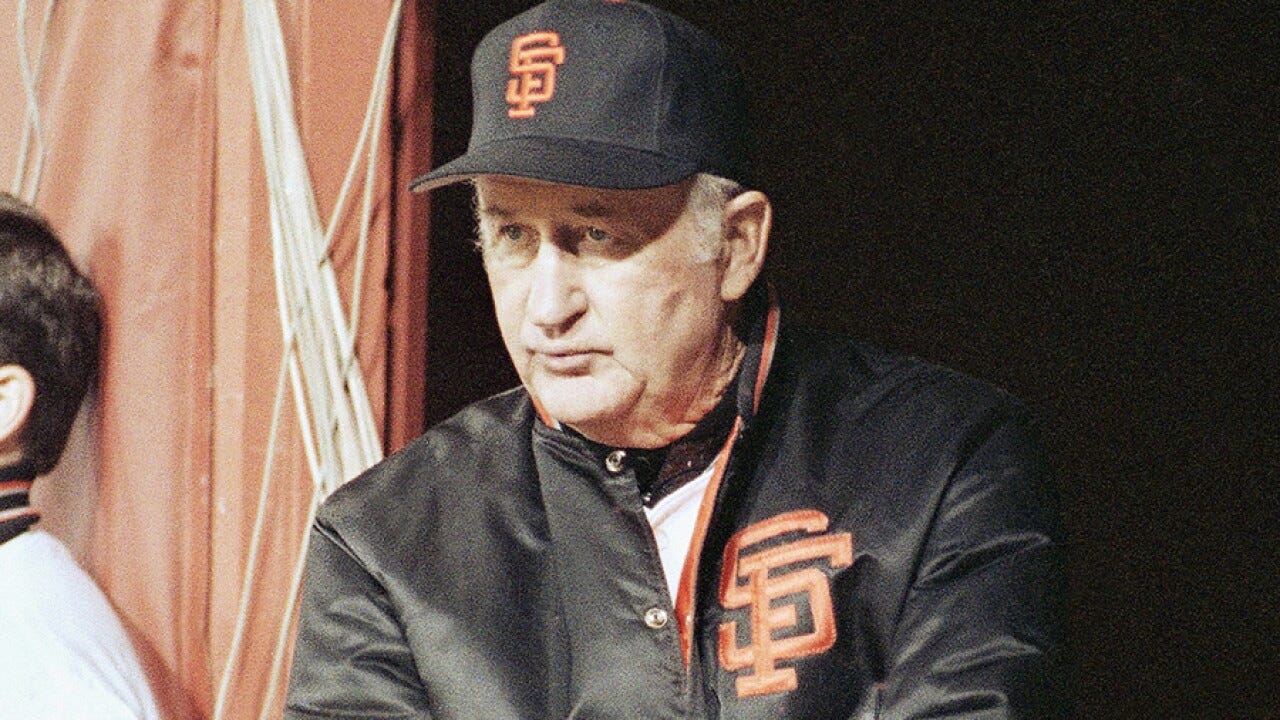
The complainer was an old-school baseball man who came out of retirement to take over the Giants in late 1985. He was also the last person Mike Scott expected to hear calling “shenanigans” on his good splitter, but Roger Craig, the Giants’ new manager, was loud and clear:
“I’ll tell the umpires before the game that if I have to [have every ball checked], I will. I’m not going to let him get away with it.”

If you enjoyed this baseball story and want to support Project 3.18, consider becoming a paid subscriber.
You can also really help us by sharing this feature on socials or restacking it here on Substack. Publishing a story is how we get on base; please help spread the word and drive us home.
Next week, Roger Craig takes on his former student and a chorus of Mets call shenanigans after a second helping of Mike Scott.
On October 19: A “Rembrandt” of Rough Stuff
Over on Clear the Field:
On the latest episode of the podcast, Ted and I profile the ballpark’s most enduring trespasser: the Eastern gray squirrel. Most of these critters come and go, but one of them took the 2011 St. Louis Cardinals on a remarkable run—and wound up immortalized on a World Series ring.
It's a great story to tell Paul and you do it so well! That Gary Carter said the ball was marked up when catching Scott in the ASG was something I had not heard before.