


Welcome to Project 3.18, where a fan-first writer tells strange and surprising stories from baseball history and culture.
If you enjoy what you read today, please subscribe to receive our free feature stories in your inbox. And if you’ve been enjoying these stories for a while, we could really use your support as a paid subscriber.
This is the second part of a story of postseason intrigue in 1986, with drama on and off the field. But we’re going to start a few months earlier, when a former mentor to Houston Astros pitcher Mike Scott made an unexpected accusation.
Here’s the first part, if you missed it:

In the summer of 1986, Roger Craig, managing the San Francisco Giants, let it be publicly known that he was against cheating in all forms. Craig believed the game had become too tolerant of illicit shortcuts, with umpires and league officials eager to look the other way: “The umpires know it’s going on most of the time, but they don’t want any part of it. They don’t want to start a big hassle.”
On June 13, Craig started a hassle, accusing two Houston Astros pitchers of defacing the baseballs to get extra movement on their pitches. He didn’t like closer Dave Smith’s funky strikeout pitch in the bottom of the ninth, ending the game and stranding two Giants on base.
Craig claimed to have inspected the balls Smith used during his two-batter save and said the closer was “cutting the ball on the black letters” of the printed signature of National League president Chub Feeney, hiding his crimes in the letter of the law.
The next night, Mike Scott started for the Astros, and Craig found more damaged goods. “I checked several balls and they all were scuffed, all except the last one. [Scott] was three for four.”
Craig kept up the complaints for the next several weeks, any time the Giants faced the Astros and the resurgent Scott. “As much as I admire and respect Mike Scott, I think he’s doing something to scuff the ball.”
The manager acknowledged the history between the two, but Craig insisted that sometime after leaving suburban San Diego with his blessing, his former pupil had turned to the dark side. “I taught Mike Scott the split-finger fastball, but I didn’t teach him how to cut the ball.”
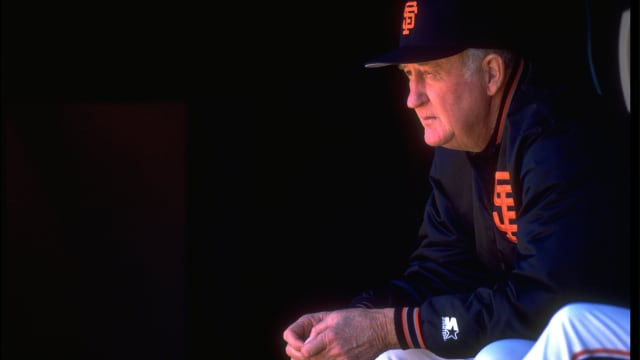
Much to the umpires’ displeasure, Craig insisted on roping them into the feud. He asked umpire Ed Montague to check ball after ball during one Scott start. The weary official found nothing. “I know they’re not angels out there on the mound,” Montague said, “I’m not saying they didn’t do anything. I’m just saying I didn’t find anything.”
Craig kept up the pressure, promising to have another respected official, Doug Harvey, “keep a close eye on Scott” during a late-July doubleheader.
The Giants’ manager wasn’t the first to accuse Scott of cheating, but he made it a cause, treating his former student like a National League version of Gaylord Perry, stopped and frisked in every city on the circuit. Like Perry, the recently retired spitball king, Scott claimed his hands were clean. “I’m a nice guy. I wouldn’t do that. It’s against the rules.” He smiled. “Neither would Gaylord.”
The Giants spent most of that season trying to catch Scott in the act. They tried technology, sending a camera crew along with the team to Houston. The cameras were ostensibly there to capture the excitement of a pennant drive, but they seemed awfully interested in Mike Scott and Dave Smith.
The Giants’ surveillance yielded only rumors and unsubstantiated theories. Astros second baseman Bill Doran was named a co-conspirator. The Giants were “convinced” that Scott would flick his sandpaper away before he could be searched and Doran would hide it and retrieve it when the coast was clear. Other rumors said Doran did the scuffing and Scott did the throwing.
Absent any hard (or rough) evidence, the suspicions that dogged Scott in 1986 and followed him for the rest of his career came from a broadly held conviction that nobody could become a pitching phenom after the age of 30 without a cheat code. Scott found it amusing to be accused of chicanery by the guy passing cheat codes out to any pitcher in earshot.
“I have a new pitch,” he said, “that’s no big secret.” Thanks to Roger Craig, the split-finger fastball was catching on all over baseball. “If you have 140 pitchers throwing them, someone’s got to have the best one.” On September 25, Scott rested his case by throwing a division-clinching no-hitter against Craig’s Giants.
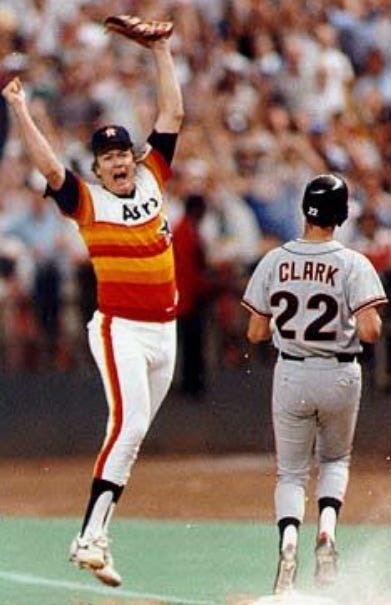
After Scott’s masterpiece, Craig was asked again: Was he scuffing out there?
Craig sighed. “I don’t know. There’s no way the umpires can catch him. He’s throwing more split-fingers. The ball’s breaking down, not riding the way it does when you cut it. He’d make a hell of a thief right now.”
After Mike Scott beat them in Game 1 of the 1986 National League Championship Series, the New York Mets had to tackle Nolan Ryan, the Astros’ less controversial co-ace. On October 9, they did it, snapping off several strings of singles in the fourth and fifth innings to set up Gary Carter and Keith Hernandez, whose extra-base hits drove in multiple runs and capitalized on Ryan’s first lackluster outing in months. Mets starter Bob Ojeda went the distance, giving up his hits but keeping but one Astro from reaching home plate.
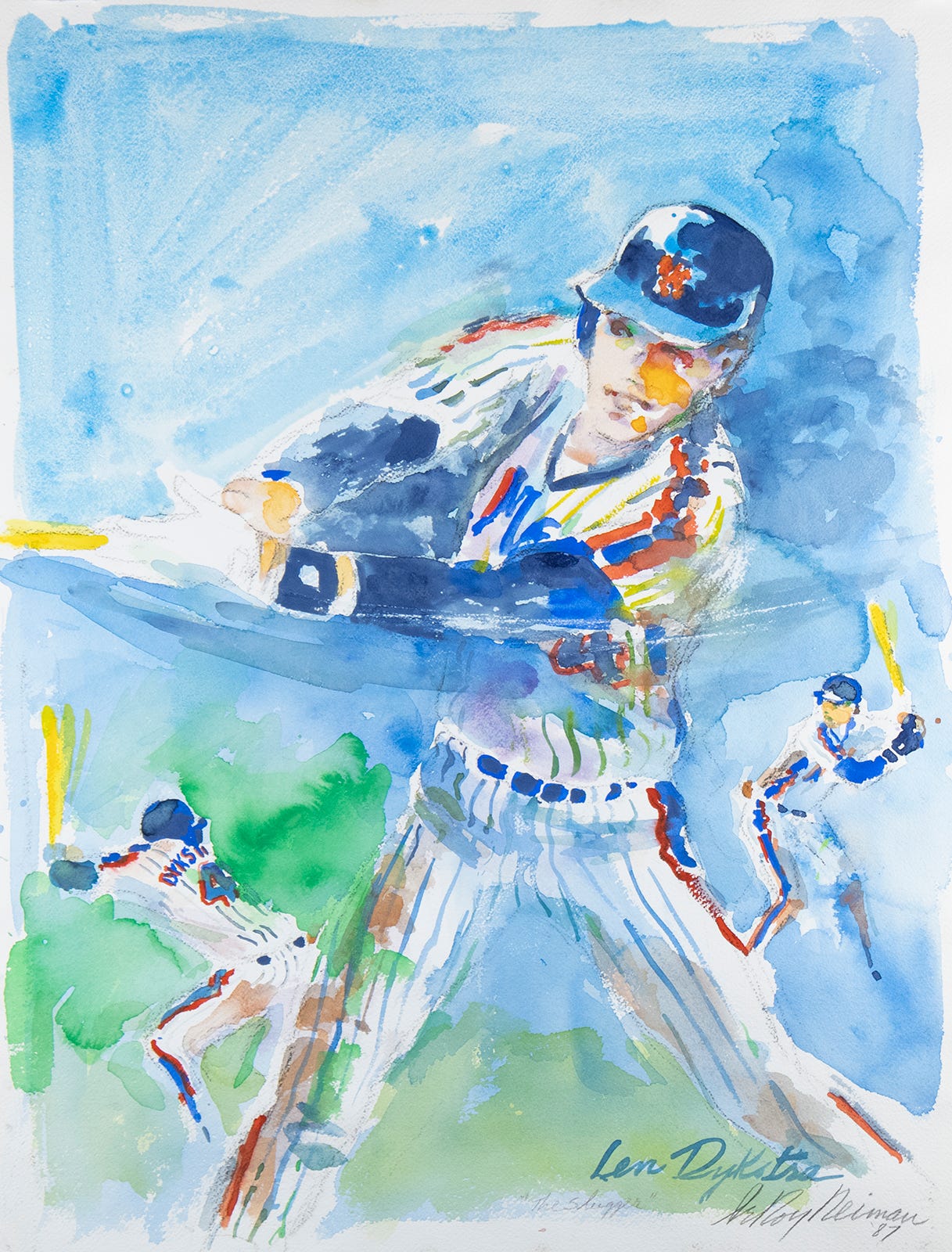
The series moved to Shea Stadium. Queens was never a pleasant visit for opposing teams, but the events of Game 3 put the rabid New York crowd in a good mood. Dave Smith entered in the bottom of the ninth with a 5-4 lead. He gave up a bunt single to infielder Wally Backman. One batter later, center fielder Lenny Dykstra hit a walk-off two-run homer, giving the Mets a 2-1 lead in the series.
It had been four days since Mike Scott’s Game 1 masterpiece and the Astros succumbed to the temptation to use Scott again on short rest. Pitching Scott in the fourth game also set up the possibility that he might appear a third time if the series went the full seven. The Mets gave Dwight Gooden another night off, and Sid Fernandez took the start for New York.
Bill Robinson, the Mets’ hitting coach, gave his youthful players some old-school advice before the rematch: “I told them, ‘Stop bitching and swing the bat.’”
Most of the Mets failed to heed Robinson’s advice. They were too busy running a sting operation.
Some fans waved swatches of sandpaper, but it was hard to maintain a sneer while New York’s vaunted lineup flailed and withered. Nobody got a hit until the fifth inning, a harmless single by third baseman Ray Knight. No two Mets were ever on base at the same time. Gary Carter went 0-for-4, dropping his series performance to 1-for-17.
Keith Hernandez went 0-for-4, but the first baseman was at least an appreciative victim. “My third time up, [Scott] had lost his fastball,” Hernandez said. “It was strictly split-finger after that. I was dead sitting on it in my last at-bat and he still stuck it on me. That’s as good as any stuff you’re ever going to see.” Throwing a split-finger pitch that was notorious for going anywhere and everywhere, Scott seemed in total control. He had only one walk in his first start and none in this one. “He paints up there,” Hernandez said. “He’s a Rembrandt.”
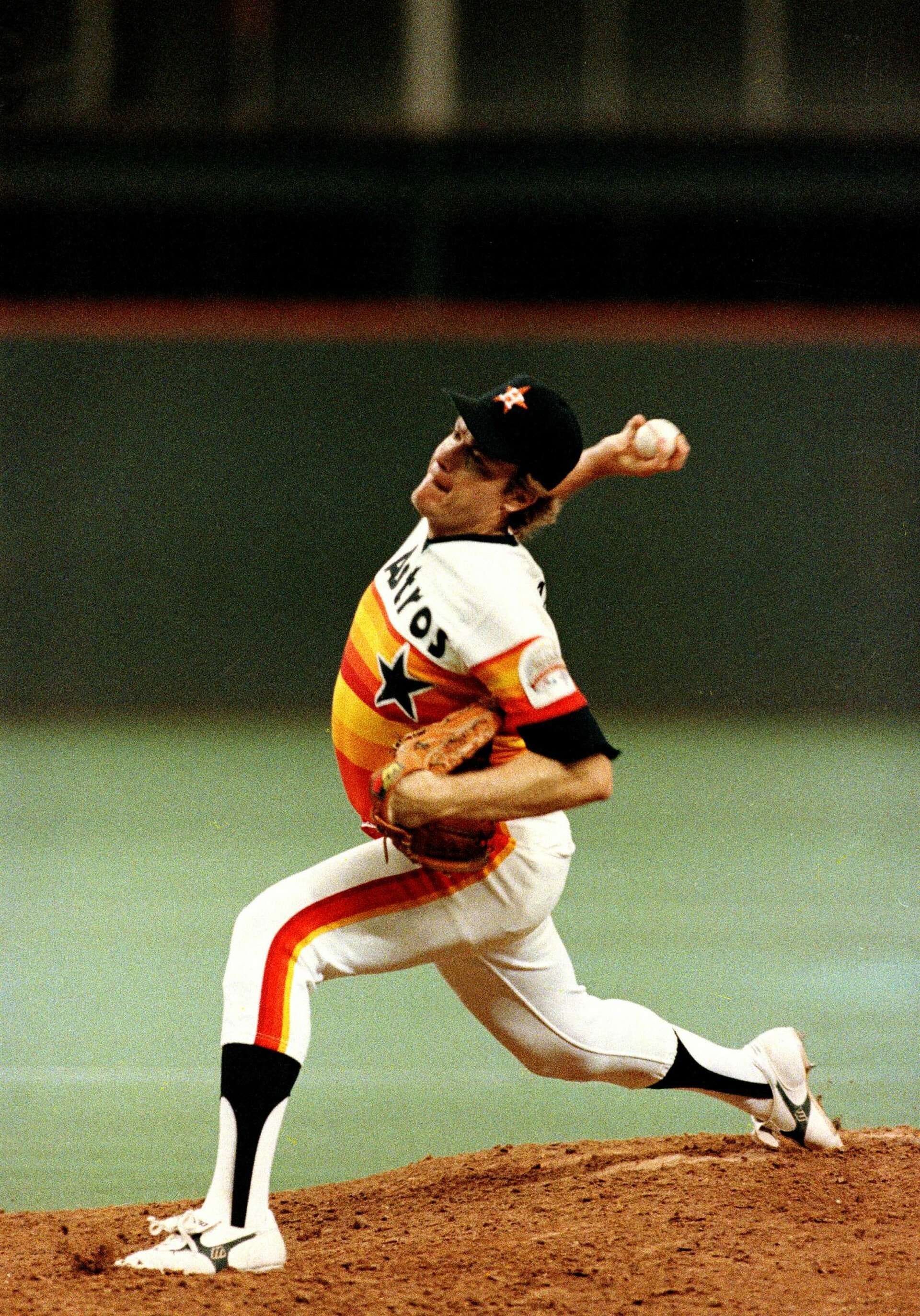
In the second inning, Astros catcher Alan Ashby hit a two-run home run, opening up a lead that felt insurmountable with Scott on the mound. Shortstop Dickie Thon added a solo home run in the fifth.
The Mets scratched out a run in the eighth, halting Scott’s scoreless innings streak at 17, an NL postseason record. He had 19 strikeouts between the two complete games, another record. It was easy to forget that he was racking up some of baseball’s most prolific hitters. Broadcaster Tim McCarver reminded national viewers that the Mets, “were not a bunch of humpties out there,” even though it seemed like “no contest.”
Few locations on earth are more closely surveilled than the diamond on a major league baseball field. Long before cameras took over, every pitcher has been monitored by more than two dozen pairs of the keenest and most careful eyes in professional sports. Not even the most artful cheat could evade that dragnet indefinitely.
Ed Hearn, the Mets’ backup catcher, had plenty of time to scrutinize Mike Scott and compare notes with his teammates. After the game he produced a baseball for reporters (“On the wide part of the cowhide, to the side of the trademark, the ball bore a scratch nearly two inches square. The surface of the ball was rough and slightly brown.”) But the journalist was appropriately cautious: “Such a mark could conceivably be produced from a sharp ground ball pounded into the dirt in front of home plate.”
“I’ll show you exactly how [Scott] does it,” Hearn said. “Every time he gets a new ball, he puts his glove under his arm and grinds the ball into his left palm. It’s not like he’s just rubbing it up, because he doesn’t spin both hands.”
“It’s in his palm,” Wally Backman said. “He just makes a grinding motion. It’s blatant to me.”
Backman, outfielder Howard Johnson, and several other teammates seized every baseball they could get their hands on, inspecting them like Customs and Border Protection agents. When a foul ball rolled into the dugout, ABC cameras showed a scramble to scoop it up and add it to the growing pile of evidence. “That’s a nice one,” Backman said, showing another marked ball to reporters after the game. “Grass must have done that.”
“We’re not saying he’s cheating,” Johnson said, tongue firmly in cheek.
“Oh, no,” Backman said. He reached into one of Johnson’s used long socks, where the two had stashed some of the most carved-upon balls they found. “This one here must have hit the screen.”
“Every f***ing ball was scuffed up,” Backman said. “Some of them were even scuffed up twice. He was a master tonight.” Keith Hernandez had admired how Scott painted corners, but Backman and the others focused on his outstandingly subtle chisel work, likening him to an unscrupulous baseball Rodin.
The dugout detectives believed that scuffers, like arsonists or mad bombers, tended to repeat certain tactics each time they struck. Many of the balls were defaced in the same spot—over the printed signature of Chub Feeney. “When you see thirty balls scuffed in the same place, you know he’s cheating,” Backman said. “But if he can get away with it, what are you going to do? If I could get away with it, I would do it, too.”
The Mets’ ballboys eventually carried a bucket of nearly 40 specimens to manager Davey Johnson’s office for safekeeping.
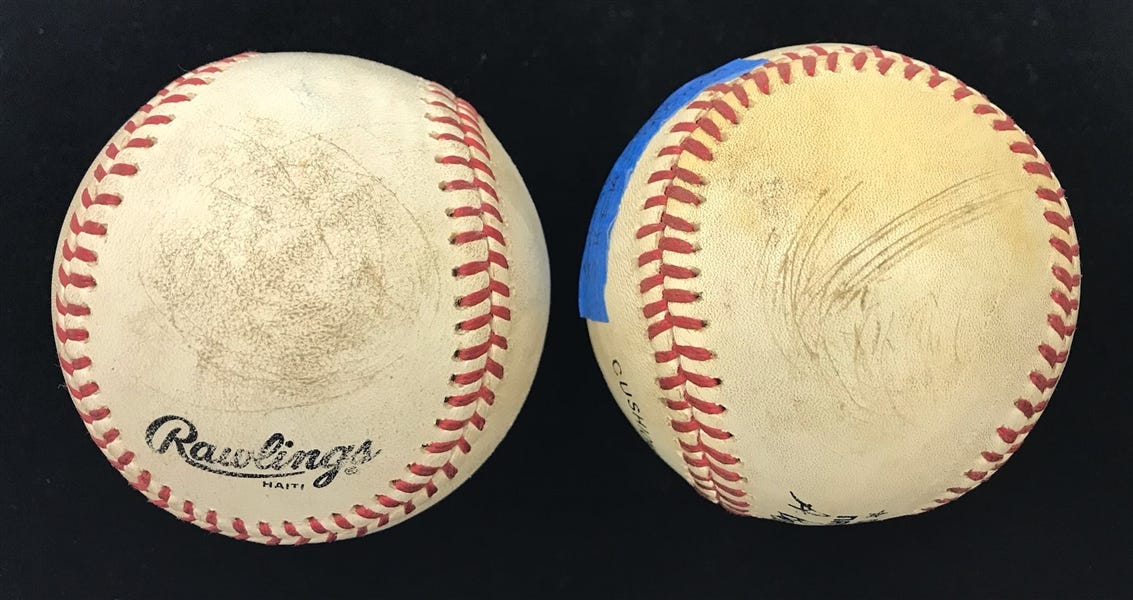
In such a charged atmosphere, the contestants lapsed into half-baked legalese. Astros manager Hal Lanier called the Mets’ bucket of balls “hearsay.” The manager pointed out that during the game, none of the Mets asked the home plate umpire, Dutch Rennert, to examine a “clean” pitch, i.e. one that had not hit the ground.
Rennert confirmed this. “I never saw a scuffed ball and the Mets never asked me to examine the ball. If it was scuffed, maybe it was from where they hit it.”
Lanier suggested a number of Mets might be star-struck facing Mike Scott. “If Backman or any of the Mets is that big a fan of Scott’s, tell them to bring their baseballs over here and he’ll autograph them.”
Backman hadn’t said much after the first game of the series, but he had taken over for Gary Carter as the spokesperson for a small, cringy faction of Mets who seemed to think their best shot at winning the NLCS was to make people feel sorry for them. “The games he’s pitched against us, God couldn’t have gone out on the mound and pitched better.”
The fifth game of the series was postponed a day due to rain, yielding another full news cycle to Scuffgate. On a wet, gray October day at Shea Stadium, umpire crew chief Doug Harvey found himself the center of attention. Harvey, 56 years old, was one of the most respected officials in baseball. Gary Carter said he was “the umpire of umpires.” Keith Hernandez said he would “gladly take Doug Harvey behind home plate for all seven games in this series.” Harvey insisted Mike Scott was innocent—or at least not guilty.
His pitch reacts like a Sandy Koufax curveball thrown at the speed of a fastball. Dammit, guys, that ball comes in there hard. And other than the spitball, it’s the most explosive pitch I’ve ever seen. And it just seems to me that nobody can accept the possibility that this man has just come up with one hell of a pitch.
The Mets’ general manager, Frank Cashen, arranged a meeting with NL President Feeney, where he planned to present the team’s evidence against Scott. In our imagination, this meeting unfolded like the courtroom scene in Miracle on 34th Street:
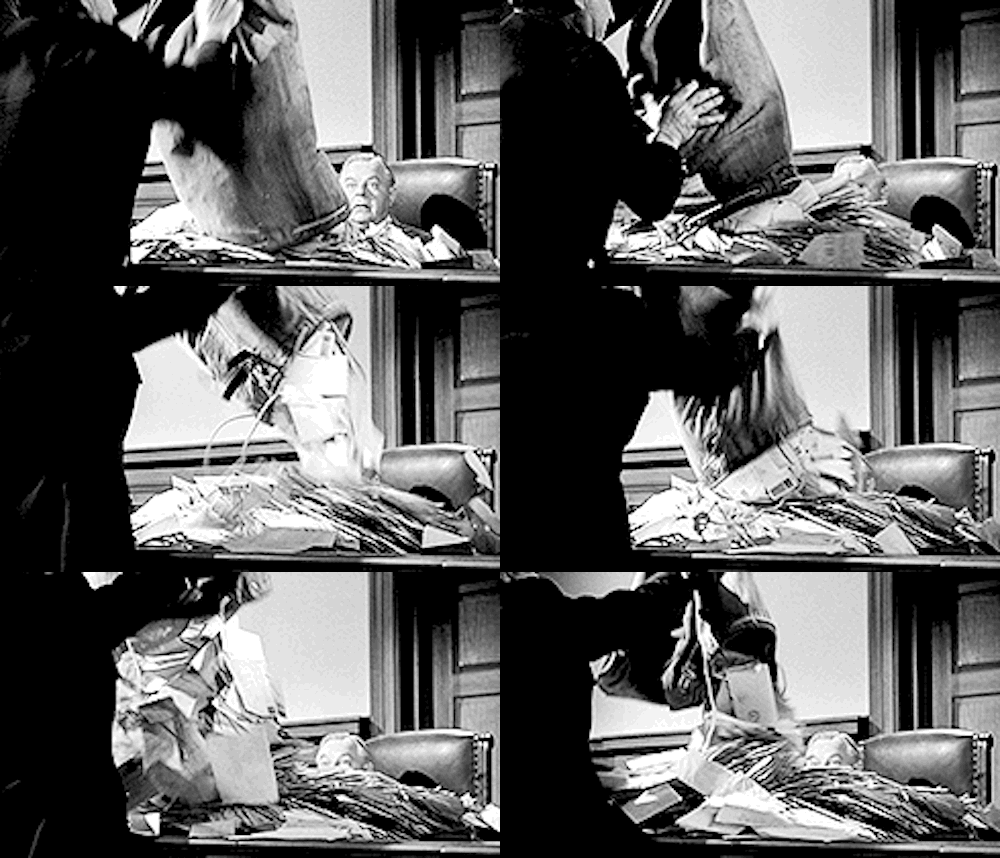
Too many of the team’s comments had a subtext of “It’s not fair!”, which wasn’t the classical champion’s mindset. “I’d hate to see the whole season go down the drain if a guy is cheating,” Cashen said. “Let’s see if he is or he isn’t. If he isn’t, he’s found some way to make the ball do something nobody in a hundred years has done.” Feeney, as allergic to hassle as the judge in Kris Kringle’s trial, declined to prosecute.
Forty years later, it seems almost unthinkable that so many players and executives made these comments in the middle of the playoffs. On the surface, they condemned Scott, but underneath, they were admitting they couldn’t beat him. In the Mets’ collective imagination, Scott was a split-finger slasher who just kept coming as hitters dropped their bats and ran screaming down the street.
Even Backman knew how this movie ended. “If [the authorities] haven’t done anything yet, they’re not going to start now,” he said. “The best thing for us to do is forget it, win the next two games, go to the World Series, and leave all this split-fingered stuff behind us.”
That was evidently the Mets’ only plan and best chance: finish the series in six.
On October 14, Nolan Ryan gave what he described as one of the best “pressure performances” of his career, allowing only two hits and striking out twelve Mets in nine innings, answering earlier comments from Backman and company that the somewhat-senior statesman was too old to finish games. After grandpa mowed them down, some of the Mets used familiar coded language:
His fastball was sinking—I don’t know where he got that from.
It looked a lot like the pitches Mike Scott throws.
Mel Stottlemyre, the Mets’ pitching coach, grabbed one of the Ryan balls that had been removed from play and felt it all over before stuffing it in his pocket. Apparently the conspiracy was spreading.
New York’s decision to save Dwight Gooden for Game 5 paid off. Gooden dazzled with fastballs and curveballs and pitched ten innings. The score was still tied 1-1 in the twelfth inning when Gary Carter, 1-for-21, hit a game-winning single.
The Astros’ urgency to get back to Scott and the Mets’ desperation to avoid him led to a thrilling battle, widely regarded as one of the most exciting games of the decade and probably one of the best Game 6’s ever. With Scott lurking in everyone’s imaginations, it was a Game 7 in all but number. The teams went back and forth, back and forth until the 16th inning, when the Mets’ closer, Jesse Orosco, went in to protect a three-run lead. The Astros scored twice, but Orosco and the Mets hung on for a 7-6 victory and beat Mike Scott the only way they knew how.
Even without a third appearance, Scott had delivered one of the best playoff performances in decades. His 18 innings of one-run pitching and record-setting strikeout numbers made him the first-ever NLCS Most Valuable Player representing the losing side. Without Scott, the Astros might easily have been swept. With him, they made the Mets uncomfortable indeed.
“You could tell that [the Mets] didn’t want to face him,” Dave Smith said. “They were psyching themselves out with all their complaining. Every time they moaned, I felt better about our chances.”
Umpire Doug Harvey, a veteran of baseball’s Decade of Misdirection, wasn’t sure the Mets were so guileless. Why would New York’s hitters broadcast their conviction that an opposing pitcher was unbeatable? Even if he was cheating, why make so big of a deal about the fact that they didn’t think they had a chance?
Harvey thought this was just another game inside the game.
By way of explanation, the umpire told a story from earlier in the season, perhaps from the late-July doubleheader when he called balls and strikes for a Mike Scott start in San Francisco, the domain of Roger Craig.
As usual, Craig was worked up and on high alert any time Scott’s pitches fooled the Giants’ hitters. “He started in on Scott right from the start,” Harvey recalled. “So I checked a ball in the first inning, and it was fine. I said, ‘Roger, it’s clean, do you want it?’ and he shook his head.”
There was a similar exchange in the second inning. In the third, Harvey was fed up. He confronted Craig, baseball in hand. “The ball is clean, Roger. Do you want to see it?”
Craig waved him away. “Harv, I know what he’s throwing. I taught him the pitch. I’m just trying to get into his mind.”
Harvey recounted that story after enduring the Mets’ Game 4 complaining. “Maybe the Mets are trying to get to [Scott’s] mind, too.“
In 1986, the only person with a prayer of beating Mike Scott was Mike Scott. The adversaries who understood this tried to turn the heat up under Scott and get him to back off from his devastating second pitch, the split-fingered scuffball, the scuffed-up splitter, whatever it was. But Scott had mastered the pitch—and made peace with being perceived as an outlaw—whether or not he was one.
The next spring, Nolan Ryan said he was working on a new pitch and considering asking Mike Scott to teach him the split-finger. Asked if he’d instruct his teammates in the art of the splitter, Scott said he wouldn’t teach anyone Roger Craig’s magic pitch.
“But I will show Nolan how to scuff it.”

If you’re enjoying these stories, we’d be so grateful if you could support Project 3.18 with a paid subscription for just a buck a week. As an independent writer, we need subscribers to back us up and help keep these tales of larceny available to all.