


Welcome to Project 3.18, where a fan-first writer tells strange and surprising stories from baseball history and culture.
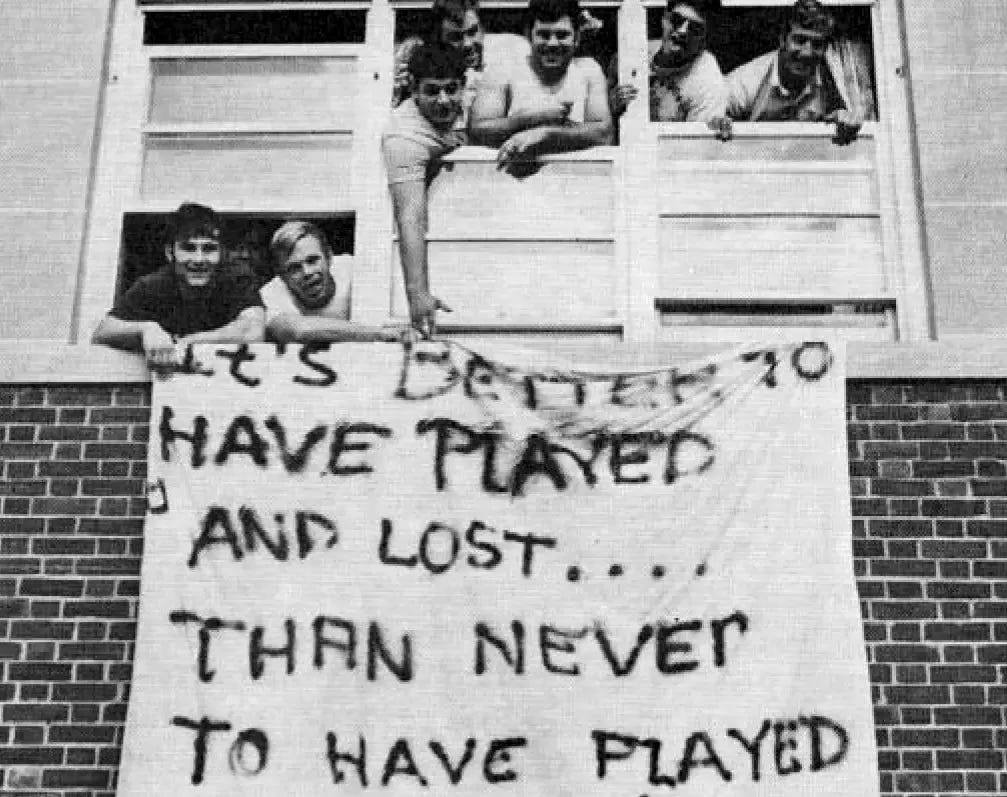
As disappointing seasons go, the experience of the 1969 College of the Holy Cross varsity football team is hard to top.
On September 23, four days before the Crusaders’ season began, the first player, sophomore Bob Cooney, became ill with what would become familiar symptoms: extreme fatigue, nausea, prolonged fever, and, the giveaway, a yellow tint to his skin and eyes. Jaundice.
Cooney’s panel of test results made it official: he had hepatitis. On September 27, Holy Cross played their first game against Harvard and looked terrible, dragging to a 13-0 loss. After that players began dropping in handfuls. The outbreak peaked on October 4, the day of the team’s second (and final) game against Dartmouth. Several of the remaining players got sick right on the field.
Mass testing showed all 26 members of the football team had what was then called “infectious hepatitis,” which today we refer to as Hepatitis A.
But that’s not all—public health officials in Massachusetts tested every member of the Holy Cross football program, 97 people, including players, coaches, and support staff. 90 people tested positive. A third of them were asymptomatic, but these individuals could still spread the disease.
There was no cure for viral hepatitis, and each of the stricken players were in for a long recovery. The Crusaders had been wiped out to a man; the remaining eight games of their season were canceled, and the players went into quarantine.
The Hepatitis A virus thrives when people gather together in close quarters with sub-par sanitation. It’s a foodborne virus, which means it spreads primarily via contaminated foods or liquids. Swift, wide-spread hepatitis outbreaks often begin in communal living spaces like military bases.
It was appropriate, then, that Major League Baseball’s first case of Hepatitis A in 1970 presented in Dodgertown, in Vero Beach, Florida, the spring training home of the Los Angeles Dodgers. Dodgertown was built on the bones of a United States Navy base vacated after World War II. The then-Brooklyn Dodgers moved in in 1953.
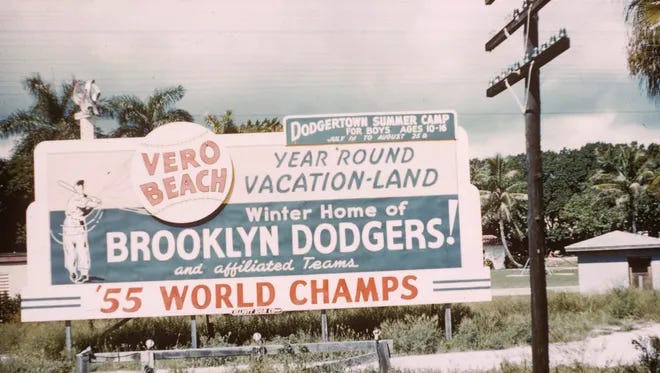
Veteran reliever Pete Mikkelsen arrived in Dodgertown in mid-March feeling run-down. A few weeks later he was down for the count. On March 29, tests confirmed that Mikkelsen was ill with infectious hepatitis. While the disease was extremely unlikely to prove fatal in a healthy person, severe cases could be debilitating for weeks and there was no treatment beyond measures to make the patient comfortable in the mean time. Mikkelsen was confined in a Florida hospital for two weeks and doctors warned the Dodgers he would need another four weeks of recovery at home.
A lone case of any communicable disease immediately sparks great interest in its past and its future. Where and how had Mikkelsen contracted hepatitis? Before spring training he’d been in Mexico on vacation, participating in a hunting trip, and he began feeling ill soon after reporting to camp. Who was most at risk of getting it from him? Two of his teammates, catcher Bill Sudakis and his roommate, pitcher Roy Lamb, were given inoculations of a compound called gamma globulin, which could lessen the severity of acute hepatitis and perhaps stave off infection.
On March 30, the New York Yankees visited Dodgertown to play an exhibition game, and Mel Stottlemyre, the Yankees’ best pitcher, wanted to visit Mikkelsen, a former teammate, at the hospital. His counterpart on the Dodgers, Bill Singer, offered to drive him.
Singer was not especially close to Mikkelsen and the two hadn’t spent much time together that spring outside the Dodgers’ clubhouse. At the hospital, some protective measures were in place; visitors weren’t allowed inside Mikkelsen’s room, but they could stand in the doorway to converse. “I didn’t go in the room,” Singer said. “I was out in the hall. We weren’t allowed any closer than that.”


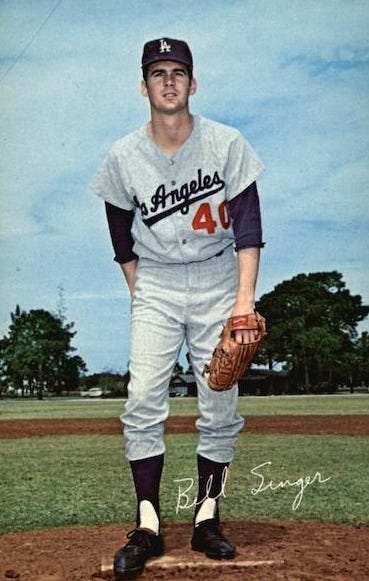
Singer, a six-foot-four right-handed starter was often compared favorably to Don Drysdale, possessing a “bulldog” mentality and a determination to take the ball every fourth day no matter what. The Dodgers were increasingly happy to give Singer that chance. In 1969 he won 20 games, struck out 247 batters, and sported an ERA of 2.34. With Drysdale now retired, Singer was a big piece of the Dodgers’ pitching plans in 1970.
Hepatitis A has an incubation period of two to six weeks, and when the 1970 season began on April 7, Singer felt something amiss. The Dodgers opened the year at home with series against the Reds and the Padres. “The whole homestand I was running laps and getting more tired all the time,” Singer said. “I was thinking, ‘Gee, maybe I’m running too much,’ and then I’d cut down and I’d get exhausted running even less.”
On April 12, dealing with the effects of what he thought might be a flu, Bill Singer nonetheless pitched nine shutout innings against the Padres. Bulldog indeed.
The Dodgers headed out on a wonky, grueling road trip, playing two games in four separate cities. The first stop was Houston, where Singer got on a scale and was surprised to find he had lost 10 pounds in the preceding three days. “I mentioned that to the trainer.” The trainer apparently took no further action. The team continued to Cincinnati, where Singer was scheduled to make his next start on April 16.
By this point, Singer was so fatigued he did not leave his bed—until it was time to go to Crosley Field and get ready to pitch. Feverish and nauseous, he pitched into the third inning. “Then I ran out of gas. I was completely exhausted. Gone. Shot.”
Singer finally told the team of his “discomfort.” The Dodgers should have put two and two together that day, but perhaps they were fooled by Singer’s uncommon toughness. He managed to stay on his feet and travel to Atlanta, then on to Montreal, where at last he could go no further, begging off from pitching on April 22. He had lost 15 pounds in a week. “Whatever this is, it’s getting worse. It’s an effort to get up.”
“I don’t want to believe that this is anything worse than the flu,” Dodgers manager Walter Alston said. “Until we get the tests back, I don’t know what else to say.”
The Expos’ physician made the call: likely infectious hepatitis. The Dodgers made arrangements to fly Singer back to Los Angeles and he was admitted to St. John’s Hospital in Santa Monica.
“That first day in the hospital I could hardly talk,” Singer said. “I had to force the words out. I took a bath one night—the next day I couldn’t get out of bed.” He lost 20 pounds before doctors stabilized his weight with intravenously administered glucose and vitamins. The Dodgers’ team physician, Dr. Robert Woods, later explained how sick Singer was:
There are various tests that we give people with hepatitis. One tells us about the liver so far as swelling and impaired functions are concerned. The normal test reading is 100 to 150. Bill’s was up to 2,750. Then there’s a test that measures jaundice. You shouldn’t get over a three on this test. Bill got a nine.
Losing Pete Mikkelsen was one thing, losing Singer was another. “It seems insurmountable,” Gene Mauch, the Expos’ manager, said of the Dodgers’ plight. Still, Mauch noted that things could be worse:
“Bill Singer with hepatitis would still be the ace of my pitching staff.”
In the wake of Singer’s diagnosis half of the major leagues went on epidemic watch. The Dodgers returned to Los Angeles at 5 o’clock in the morning on April 23, and the players were instructed to report to Dodger Stadium that same afternoon to receive gamma globulin shots.
But why hadn’t this step been taken sooner, say, as soon as Singer reported symptoms? “There was thought given to mass immunization,” the Dodgers’ trainer said, “but the decision was made against it. … I’m not at liberty to say who made that decision.”
In all likelihood, the trainer was covering for Al Campanis, the Dodgers’ vice president and day-to-day head honcho. “The doctors told us there was no need to immunize the whole team,” Campanis told reporters. He also made sure to implicate Singer’s good deed: “I have heard he visited Mikkelsen in the hospital after the entire team was warned against it.”
Contact tracing began in earnest. Mel Stottlemyre and the Yankees were notified and he was the next up for a shot. The California Angels had played the Dodgers in the “Freeway Series,” a preseason exhibition, and attended a press banquet with them. Shots for everyone, including anyone with access to the Angels’ clubhouse.
Other hot spots flared up. A secretary who had traveled with the St. Louis Cardinals that spring fell ill. Another team inoculated.
The defending champion Mets had the closest scrape, when their primary catcher, Jerry Grote, became sick. By coincidence, the Mets were in Los Angeles in late April when Grote began complaining of chills. Woods, the Dodgers’ physician, checked his temperature: 103 degrees. Off to St. John’s, probably a room or two away from Singer.
While they awaited a diagnosis, the Mets began to spiral, asking the team officials when they could expect their shots of gamma globulin. “They ought to do it,” said Ed Kranepool, the team’s union representative. “Heck, I’d rather take a dozen needles than take a risk of catching something.”
Tests showed no sign of the hepatitis virus in Grote’s system. He turned out to have a run-of-the-mill kidney infection. He was released from the hospital on May 1 and returned to action just days later.
Hepatitis was a waiting game. Infected people typically didn’t show symptoms until for weeks, and they were capable of transmitting the virus well before those symptoms appeared. There was no Hepatitis A vaccine in 1970; that would not become widely available in the United States until 1995. Cases ebbed and flowed, but in 1970 it seemed to pop up everywhere. More than 100 cases were reported every week.
In late May, the Pittsburgh Pirates, who received their inoculations around the time of the Grote scare, became the next team to play the waiting game when one of the team broadcasters went to the hospital with suspicious symptoms.
There was so much smoke that spring, but what would have happened if there was a real fire?
“Many have paused to wonder the consequences should a professional baseball team be leveled during the height of the season,” a prominent sportswriter named Melvin Durslag wrote.
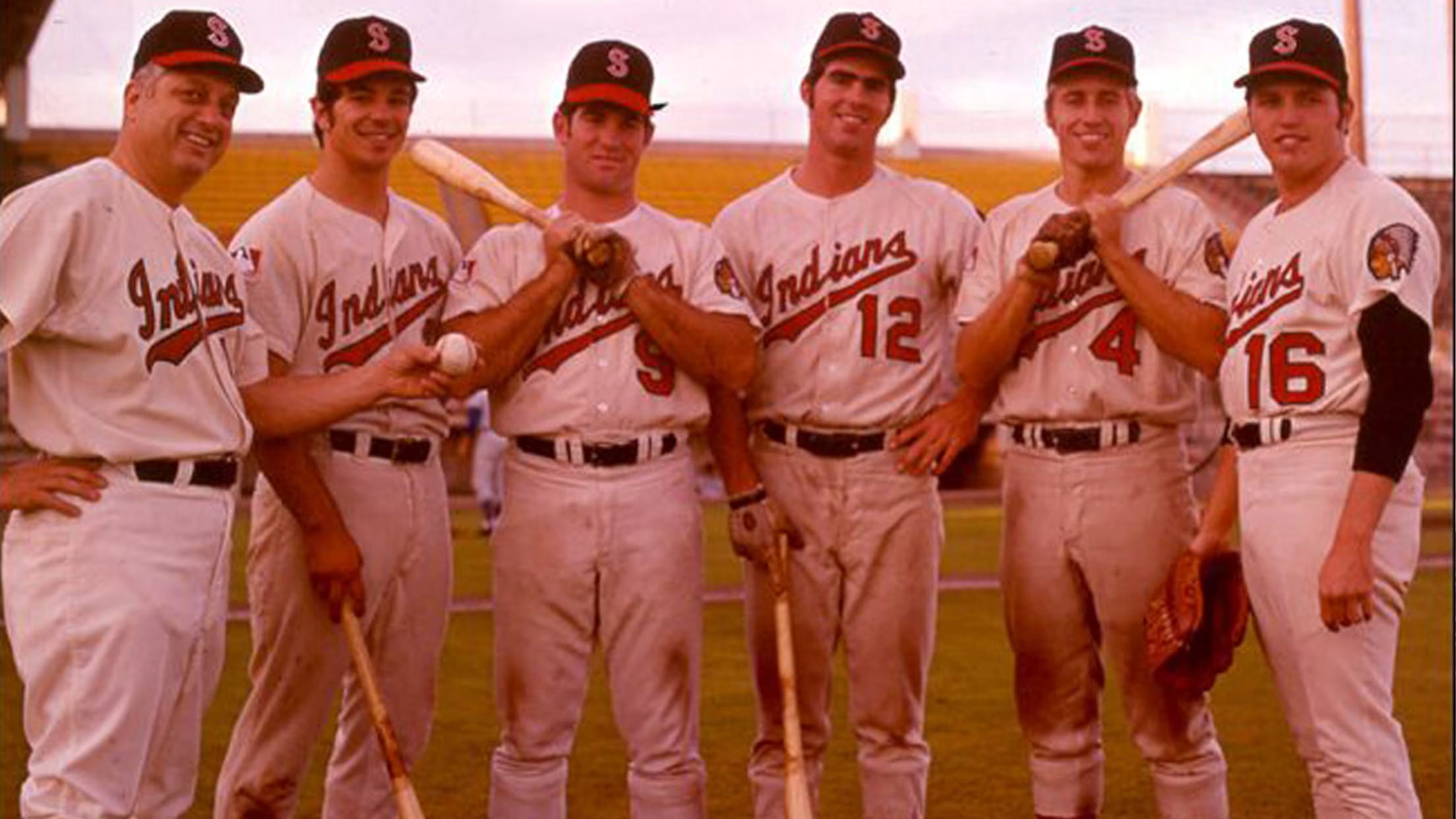
Like other major sports, baseball had long had grim procedures for “re-stocking” a team in the event of what Durslag tidily described as “a traveling disaster,” but there were no rules for “simple incapacitation.” If the Dodgers went down, as the Holy Cross football team had, the AAA Spokane Indians would have to be called up wholesale.1
The Dodgers’ outbreak ended with Bill Singer, but that was small consolation to the stricken pitcher, who turned 26 years old in the hospital. “I can’t do any walking. I have to stay in bed all the time. I can get up and go to the bathroom and that’s about it.” On the worst day, just turning his head left him dizzy. He’d never experienced helplessness like that in his life.
Singer listened to Dodgers games on the radio, hearing best wishes delivered by Vin Scully, who had famously dubbed him “the Singer Throwing Machine.” When he felt strong enough to read, the pitcher sifted through his correspondence, which was piling up.
You hear guys talk about when they get sick and how they get all these get-well cards and stuff. I thought it was a bunch of baloney, but not now. There’s a lot more Dodger fans than I thought.
Singer was released from the hospital on May 7 and “back at zero” in terms of his strength. “Hepatitis really knocks a person out,” Dr. Woods explained. “It’s like pulling the plug out of the bath tub. Everything is drained out of you. Bill may not get back all his old strength for a year.”
The virus attacked the liver, and made it more difficult for that underappreciated organ to perform its many important functions, including the removal of certain toxic materials, such as alcohol. “I can’t drink for a year or two,” Singer said, still wrestling with the news. “Not even a beer after a ball game.”
People recovering from hepatitis learned that the liver covers up many vices. Chocolate was out. So were fried and fatty foods. Vegetables were okay.
Dr. Woods estimated eight or nine weeks before Singer might return to the field. Pete Mikkelsen, the Dodgers’ Patient Zero, was activated in late May, three months after he began showing symptoms. In New York, Mel Stottlemyre never tested positive, and partly because of this, Singer was increasingly of the belief that he didn’t catch the disease from Mikkelsen.
“An epidemic of hepatitis hit Florida this year. It had something to do with the Gulf Stream. Mikkelsen is supposed to have picked up the disease in Mexico, but he doubts it. He feels he got it in Florida, too.”
It was easy to blame Florida (or Mexico), but the true source of the Dodgers’ brush with calamity was never pinned down. Viruses do better when they maintain a little mystery.
Around the time Mikkelsen was activated, Singer was cleared to begin exercising. There were no rehab facilities or minor-league rehabilitation assignments then, so he came by Dodger Stadium to pick up his gear and took it home. He wasn’t sure how long it would take him to get back. “It probably depends on me. I know in the past when I’ve gotten illnesses, I’ve always recuperated rapidly.”
He began throwing in early June, and on June 10 he threw 28 minutes of batting practice at Dodger Stadium. “I thought I pitched well.”
Walter Alston agreed, deciding Singer would return to the rotation on June 14 against the Chicago Cubs. “I’ll just see how many innings he can go comfortably,” Alston said. “I’m not going to push him and I’m not going to use him in relief.”
After 52 days on the Disabled List, Singer’s start against Chicago was rocky. He gave up four runs in two innings, but the Dodgers rallied and came away with the win. His next start was better; he went five innings in Cincinnati and allowed just two hits, earning his second win of the season.
On June 23, on a humid Atlanta day with temperatures in the 90s, Bill Singer took a no-hitter into the eighth inning. No one was more surprised than he was. “When I was warming up, the ball felt as heavy as a shot put. But once the game got started, it was one of those days when everything was there.”
Alston said the plan had only been for Singer to go five or six innings, but the unwritten rules were inviolable in those days: “When he had the chance at the no-hitter,” Alston said, “we had to let him go.”
As soon as third baseman Clete Boyer singled with two out in the eighth, Alston pulled Singer, and the Atlanta Stadium crowd gave the opposing pitcher a standing ovation. Alston then showed a dry wit by calling for Pete Mikkelsen. The reliever who might have gotten Singer into so much trouble now saved him, finishing the eighth and allowed only one hit in a scoreless ninth. The recovered pitchers combined for a two-hitter and a 7-0 Los Angeles victory.
“The Big H got ‘em!” Singer shouted afterwards, throwing his arm around Mikkelsen’s shoulder. “Just call us the Hepatitis Twins.”
After such an impressive showing, Walter Alston wondered if perhaps the Dodgers had discovered a new opportunity in an old virus:
“Send a case [of hepatitis] to all my pitchers.”
In the fall of 1970, a year after the first Holy Cross football player fell ill, Massachusetts public health officials revealed the remarkable cause of the hepatitis outbreak that leveled the Crusaders. On August 28, 1969, during a spell of hot weather, a group of four children, siblings, who lived near the team’s practice field, decided to turn on the irrigation sprinklers and cool off. All four were infected with hepatitis at the time. When they failed to completely turn off the system after their play, contaminated water pooled around the ground-level sprinkler heads.
The next day, August 29, a fire at a cafe two miles from the Holy Cross campus required water from Worcester’s fire hydrant system to extinguish. The use of the hydrants caused water pressure in the area to drop precipitously, and design flaws in the Holy Cross water supply system caused the water sitting around the sprinkler heads to be sucked back into the pipes via negative pressure. Some of this contaminated water made it back to the spigot from which the entire football team got its drinking water. The hypothesis was essentially proved by the fact that two players who got cut from the team on August 28, the day before the fire, were the only Crusaders who never tested positive.
With evident admiration, the lead investigator, Dr. Leonard Morse, described the Holy Cross outbreak as a perfect chain of “freak happenings.” If the late summer weather hadn’t been so hot or the children had turned the sprinklers off or the fire hadn’t happened, not a single player would have gotten sick. Instead, they all got it.
Some disciplines are relatively unaffected by luck. Architects, plumbers, graphic designers, to name just three. On the other end of the spectrum are the jobs where luck is both essential and sometimes determinative. For all its scientific underpinnings, public health is as much a game of luck as pitching is.
Most viruses are caught or controlled, but public health officials go to work each day knowing that despite their best efforts, a pathogen might take a freak bounce and slip through the defense. When that happens, sometimes all they can do is buckle down and try to stave off the big inning. In 1970, they did—
—here’s hoping they do it again in 2026.

Over on Clear the Field:
Ted and I try to avoid moralizing on our podcast, but the story of Rocky Colavito’s 1961 ejection for fighting in the stands at Yankee Stadium inevitably leads to an important message about putting family first:

Calling up the 1970 Spokane Indians would not have been the worst outcome for Dodger fans. That 94-win team featured future LA stalwarts Bill Russell, Steve Garvey, Bill Buckner, and Davey Lopes, all under the supervision of manager Tommy Lasorda, and is remembered as “the best minor-league team in the second half of the 20th century.”
See, this is why I don’t visit sick people in the hospital - there’s sickness there. Interesting story, Paul - I had never heard it, and I was very plugged in to MLB in 1970.
My wife’s a retired nurse - I told her I’m afraid of another out break again; not Covid but possibly something worse.
Not to get political but with what we have at present & with all the agencies we had no longer here I’m gearing myself up for two or more years of wearing masks.
I hope I’m wrong & I’m praying we don’t have a repeat of confinement & worse in our future.