


Welcome to Project 3.18, where a fan-first writer tells strange and surprising stories from baseball history and culture.
If you enjoy what you read today, please subscribe to receive our free feature stories in your inbox. And if you’ve been here for a while, we could really use your support as a paid subscriber. Paid subscribers receive access to exclusive content and help keep this publication going and growing.
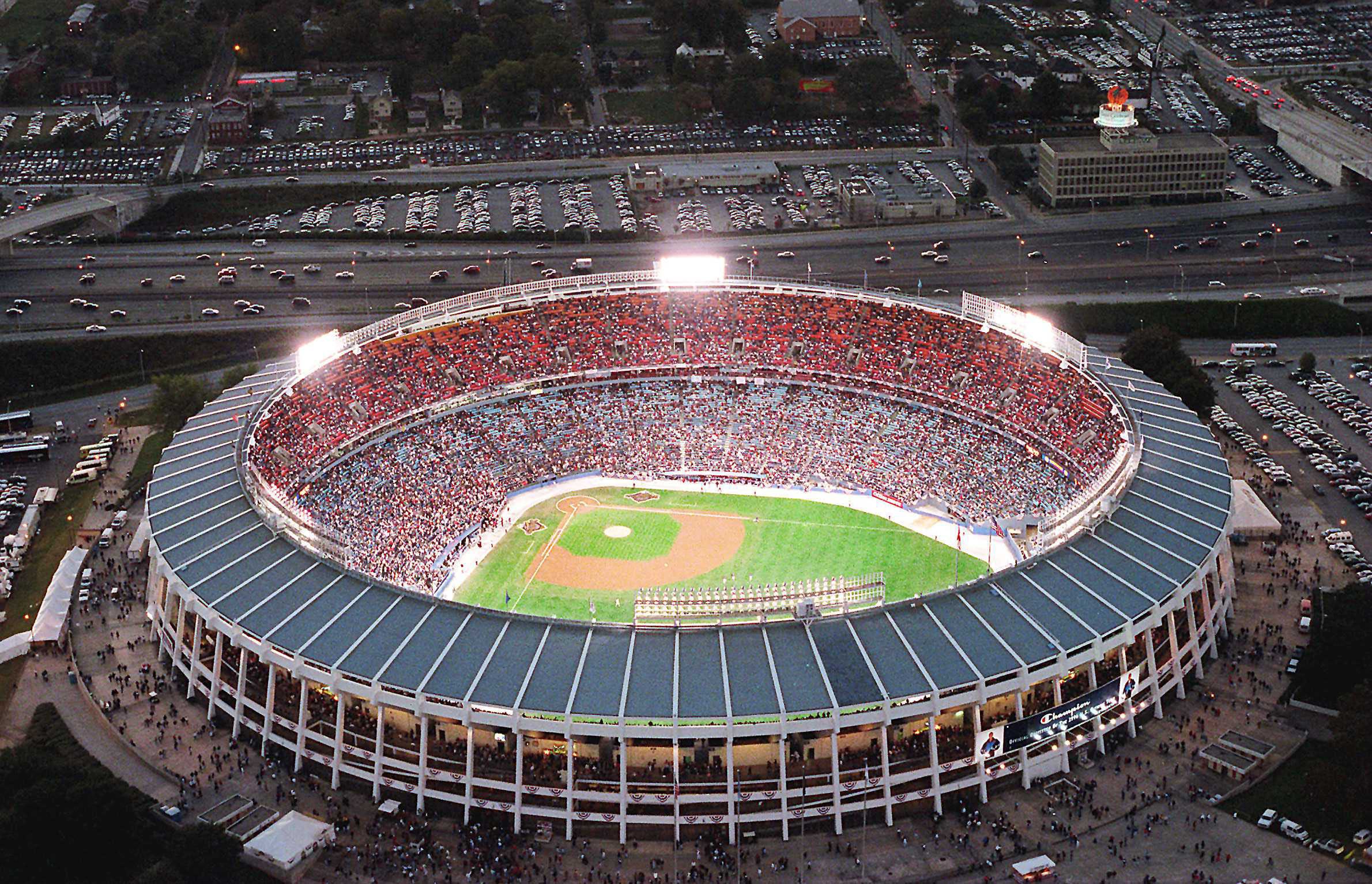
In honor of the 209th birthday of the United States of America, the 44,997 fans who came to Atlanta Fulton County Stadium on July 4, 1985 were promised fireworks. But first there would be baseball, the Braves against the New York Mets. Both the game and the fireworks depended on the weather, a double-or-nothing summer spectacular, and it was raining in Atlanta at 7:40 p.m., when the game was supposed to start.
An hour passed before the grounds crew could remove the infield tarp. At 9:04 p.m., when most of the city’s other fireworks shows were being hurriedly set off in the window of good weather, the game was just getting underway.
Rick Mahler, 11-7, started for the Braves. Dwight Gooden started for New York. Gooden, 20 years old, was 11-3 on the season, with a 1.75 earned run average and more strikeouts than Nolan Ryan. His participation made the Mets the favorite going into the game, but Gooden never really got going. He walked three in the second inning, putting a lot of pitches on his precious arm. He recorded a strikeout and gave up a single in the third, and then the rain returned.
The game was delayed for 40 minutes. Davey Johnson, the Mets’ manager, watched the skies, frowned, and shook his head. Gooden had sat for too long. When the weather cleared, a reliever, Roger McDowell, replaced him.
The Braves’ manager, Eddie Haas, allowed his starter one tentative batter after the rain delay. Mahler gave up a single and Haas came for the baseball. It was looking like a long night for the bullpens.
New York first baseman Keith Hernandez doubled in the first and tripled in the fourth, contributing to a four-run inning that put the Mets ahead, 5-3. With no designated hitter to tidy things up, the double-bullpen game fractured into a jigsaw puzzle of pitching changes, position shifts, and double-switches.
Hernandez homered in the eighth and the Mets were winning, 7-4. Around this time, the Mets’ television broadcast crew, Ralph Kiner and Tim McCarver, began planning their departure, summoning a cab to wait for the end of the game. They hoped the soon-to-be-lit fireworks would keep fans in their seats and let them jump in their cab and beat the traffic.
Davey Johnson began calling in what were, in theory, his best bullpen arms, starting with Jesse Orosco. Orosco was struggling after several excellent years, and he wasn’t alone. The former Mets’ stopper now glumly described himself and fellow relievers Doug Sisk and Tom Gorman as the Mets’ “continuers.” He got the continuing going against the bottom of the Braves’ order, loading the bases and walking in a run before Johnson pulled him. Sisk entered the game and center fielder Dale Murphy hit a three-run double, giving Atlanta an 8-7 lead.
Bruce Sutter, the Braves’ closer, did some continuing of his own in the top of the ninth inning, giving up three straight singles and a run that tied the game. The Braves did not score in the bottom of the ninth. July 4 was over, but the game was not.
When night baseball first arrived in the major leagues in the mid-1930s, it came with some sensible rules. One of them held that no major-league inning could begin after 12:50 a.m. Any game dragging that late into the night would be suspended and completed at a later date.
For some reason, Branch Rickey hated this rule.
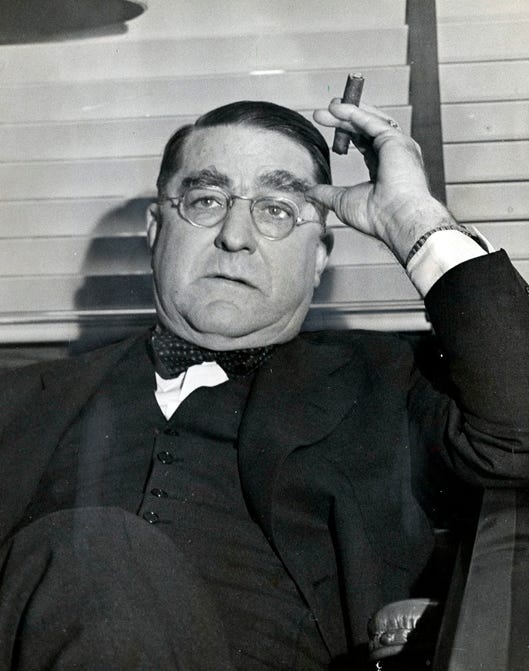
In 1949, Rickey, then the president of the Brooklyn Dodgers, was up to his usual disruptive tricks. He had already reshaped the minor leagues with the “farm system” and dashed baseball’s unofficial color barrier, and this time Rickey had his sights set on the official rules, all of them. He was embarrassed by the rulebook at the time, seeing it as a hodgepodge of regulations, some written in language so archaic that it might as well be dead. A great housecleaning was necessary, and Rickey got himself put in charge of a committee that would recodify the old-time game for the modern day.
In the course of their work, Rickey’s committee took the liberty of doing some keep-and-throw, and one of the things they discarded was the sport-wide prohibition on games continuing long past midnight. The individual leagues could make those rules for themselves. The American League, facing pressure from several cities with their own curfews, quickly reinserted the rule, but the National League, where Rickey held sway until 1955, never did, presumably having forgotten the whole thing.
The issue was not revisited in the NL until the early 1980s. The resulting rule, 4.1(d), stated:
A legal game stopped because of bad weather after 12:45 a.m. shall be called immediately and become a suspended game.
In other words, only an act of God could halt a late game in the National League.
Doug Sisk continued pitching for the Mets, faring much better with the bases empty and delivering a scoreless 10th, 11th, and 12th for New York. He was matched by the Braves’ Terry Forster. Forster had been a capable reliever for A long time, but late in his career he was struggling with his weight. Forster’s size had recently attracted the attention of David Letterman, the svelte host of NBC’s Late Night show, who made waves by describing Forster as “a fat tub of goo.1” He didn’t seem very gooey as he threw three scoreless innings for Atlanta, including the 12th, when Keith Hernandez singled and became the fourth Mets player ever to hit for the cycle.
Forster ran into trouble in the 13th, giving up a two-run home run to Howard Johnson, a late-inning replacement off New York’s rapidly emptying bench. Johnson’s blast made it 10-8.
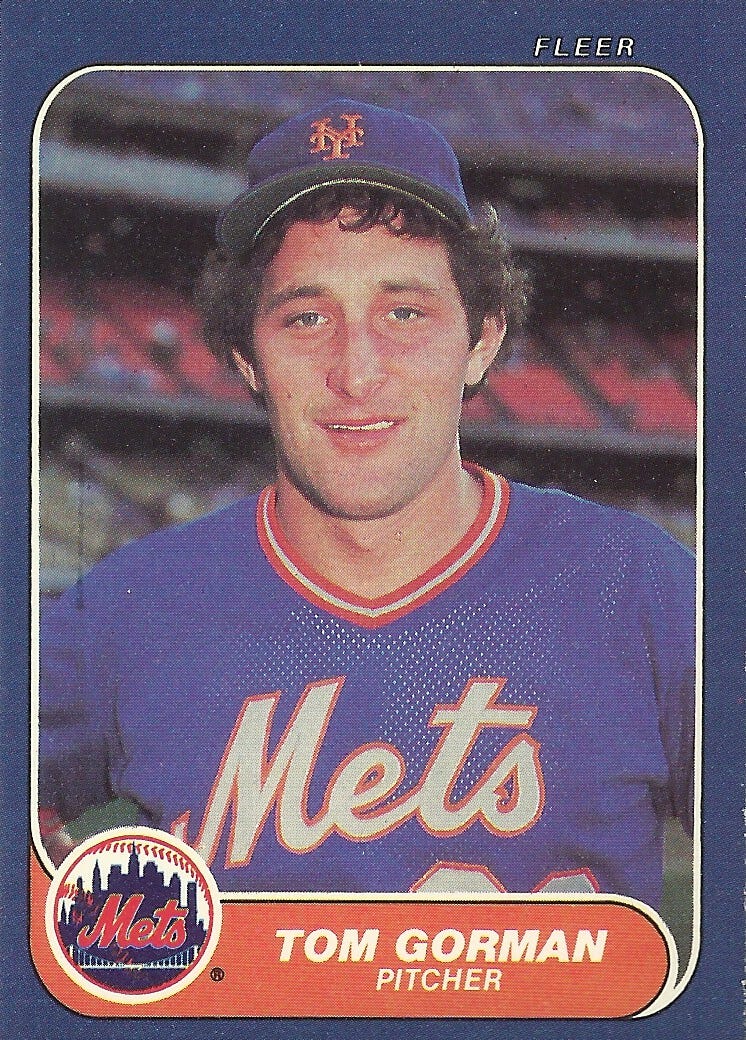
Lefthanded Tom Gorman was the only reliever left in the Mets’ dugout, and in the bottom of the inning, Davey Johnson called on Gorman to reel in the save that eluded Orosco back on July 4. Gorman gave up a single and struck out Gerald Perry and Dale Murphy. He had an 0-2 count on the Braves’ right fielder, Terry Harper, and went with a forkball. Harper sent it aloft. The towering fly ball appeared foul until it dinged off the left-field foul pole, a home run that tied the game again. Like Orosco, Gorman had a blown save, but with no other relievers left, he had to keep pitching.
Tim McCarver and Ralph Kiner, both former players, were deep into their bag of yarn. Kiner in particular had slipped into a kind of storytelling fugue state, tossing off trivia and anecdotes with an increasingly casual grip on dates and facts, filling the dead time while the Mets failed to win and refused to lose. McCarver kept reminding insomniacs tuning in at home that they were not watching a late-night replay of the earlier game: “This is really happening. It is now 2 a.m. New York and Atlanta time.”
Hearing this, Kiner seemed to briefly come back to reality: “Seriously, though, this is ridiculous.”
It was ridiculous. The beer vendors were long gone, but every coffee pot in the stadium was percolating. One fan in the upper deck swore they heard a vendor call, “Waffles, grits, cold milk!” Perhaps he’d dreamt it; many people were plainly asleep in their seats.
Tens of thousands of sensible guests had already left, but the rest lingered, savoring the novelty and burnishing their “die-hard” credentials. Many small children remained at their posts. Their parents had promised fireworks, and a promise was a promise.
One nine-year-old, whose usual bed time was 9 o’clock, told a reporter he was getting through the night on a combination of hot dogs and naps. “I’ve had fun,” he said, “even though we’ve been here since the beginning.”
The 14th, 15th, and 16th innings came and went. In the Mets’ dugout, players reached back to high school tactics, turning their jackets inside-out and donning “rally caps,” the headwear of the truly desperate. “We were literally trying anything,” Keith Hernandez said.
If he had to suffer, Hernandez wanted to be sure somebody knew about it. “[In the 17th inning] I figured I just had to call somebody. I called my brother Gary and told him I just wanted him to know I was still out here playing.”
A few players appeared to be early birds. Howard Johnson entered the game in the ninth inning and went 3-for-5 with an intentional walk. Ray Knight, the Mets’ third baseman, had had a miserable July 4, going 0-for-7, including three outs with the bases loaded. But once the calendar turned to July 5, Knight seemed to wake up, going 3-for-4. “That was my problem last year, I couldn’t hit before 2 a.m.”
Tom Gorman was still pitching in the 17th inning. Forster (and his replacement) were gone, removed for pinch hitters who hadn’t hit. Now Haas brought in Atlanta’s last available reliever, Rick Camp.
Camp was greeted by Gary Carter, the Mets’ catcher, who caught the entire game for New York. “It took a toll on me,” Carter said, “but I wanted to be in there.” The Mets wanted him in there, too: He was as in the zone as Ralph Kiner, going 5-9 with a walk that night. One of those hits was a single off of Camp. Next came right fielder Darryl Strawberry, who had also played the entire game. Camp got Strawberry with a called strike three. Strawberry rounded on the home plate umpire, Terry Tata, pointing out, perhaps correctly, that Camp’s pitch was nowhere near the strike zone.
Umpires get tired, too. According to Strawberry, Tata replied, “At 3 o’clock [in the morning], that’s a good pitch.” Strawberry decided, perhaps correctly, that that was an opinion worth challenging, and he got ejected When Davey Johnson heard what had been said, he got himself thrown out, too.
Camp finished his inning and Tom Gorman cruised through the bottom of the 17th. The crowd cheered when the stadium announcer reported the game had officially become the longest in major-league history. A plaintive banner in the upper deck seats unfurled:
WHAT THE HELL IS GOING ON?
After four becalmed innings, the game began moving in the 18th. Howard Johnson singled and advanced on an error when Camp made a bad throw fielding a bunt attempt. Center fielder Lenny Dykstra hit a sacrifice fly, breaking the deadlock and giving Tom Gorman his second save opportunity of the night.
Gorman was in his sixth inning of work, but he still looked strong, getting through Gerald Perry and Terry Harper, who had earlier ruined his Fourth of July. With two away, the Braves were down their last batter, Rick Camp.
As a National League pitcher who got his share of garbage innings, Camp already had a handful of plate appearances that season. None ended in hits, but he walked once with the bases loaded, so there was some hope.
Still, disrespect was rampant as Camp came to the plate with the game on the line. Gary Carter and the entire Mets infield rose as one and began performatively waving the outfielders closer in.
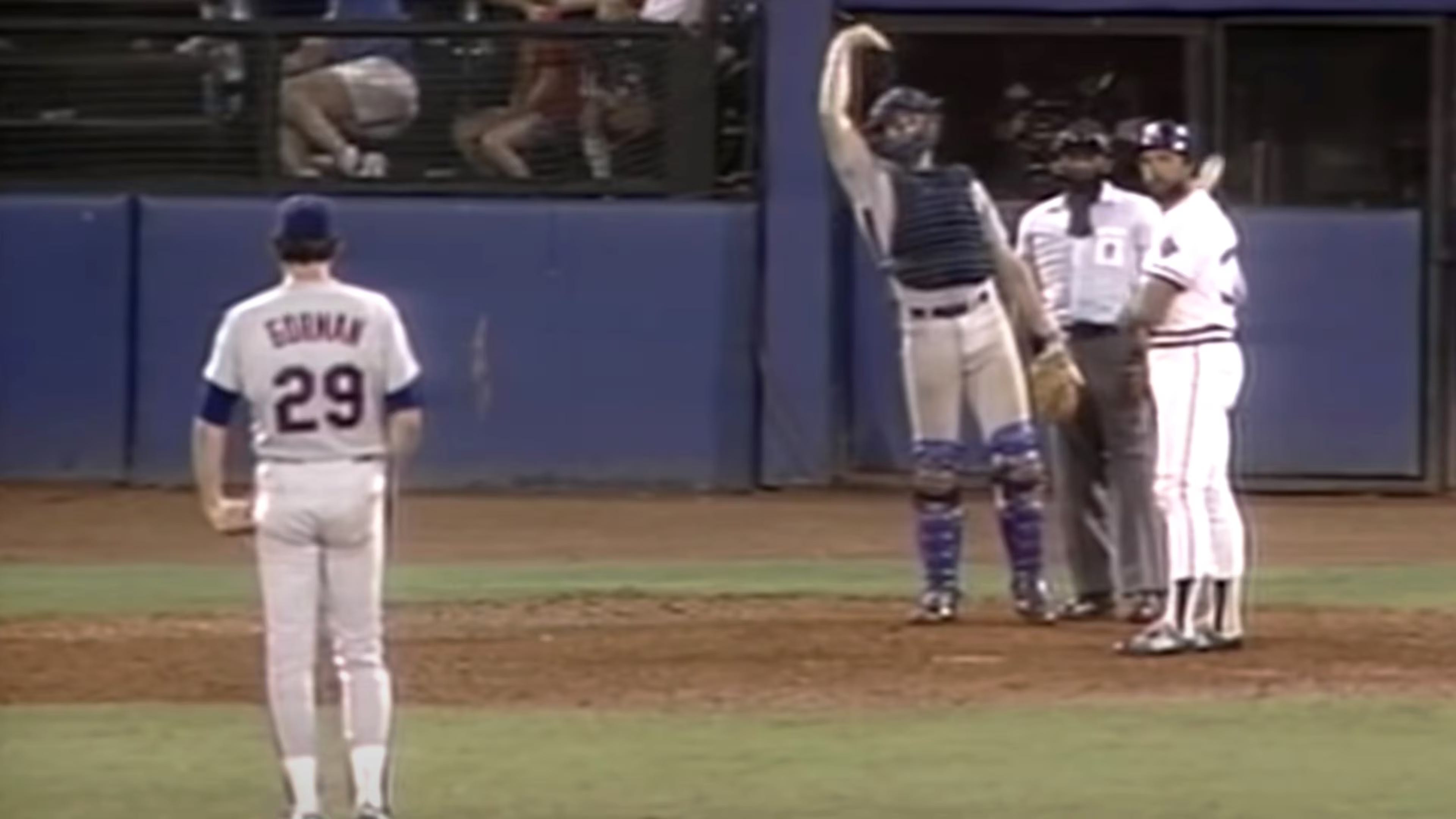
Camp took a mighty cut at Gorman’s first offering and fouled it off. Atlanta Journal writer Gerry Fraley described the pitcher’s swing as “unpolished.”
“Camp’s lifetime average,” McCarver noted, “is 062. No career home runs. Ten career base hits.”
One booth over, the Braves’ television broadcast team that night, Ernie Johnson and John Sterling, were having the same conversation, albeit with a more positive spin.
“At least he took a good cut,” Sterling said. The tired Sterling succumbed to a daydream. “Ernie, if he hits a home run to tie this game…”
Johnson laughed at the very idea of it. Sterling went on:
If he hits a home run, this game will be certified as absolutely the nuttiest in the history of baseball.
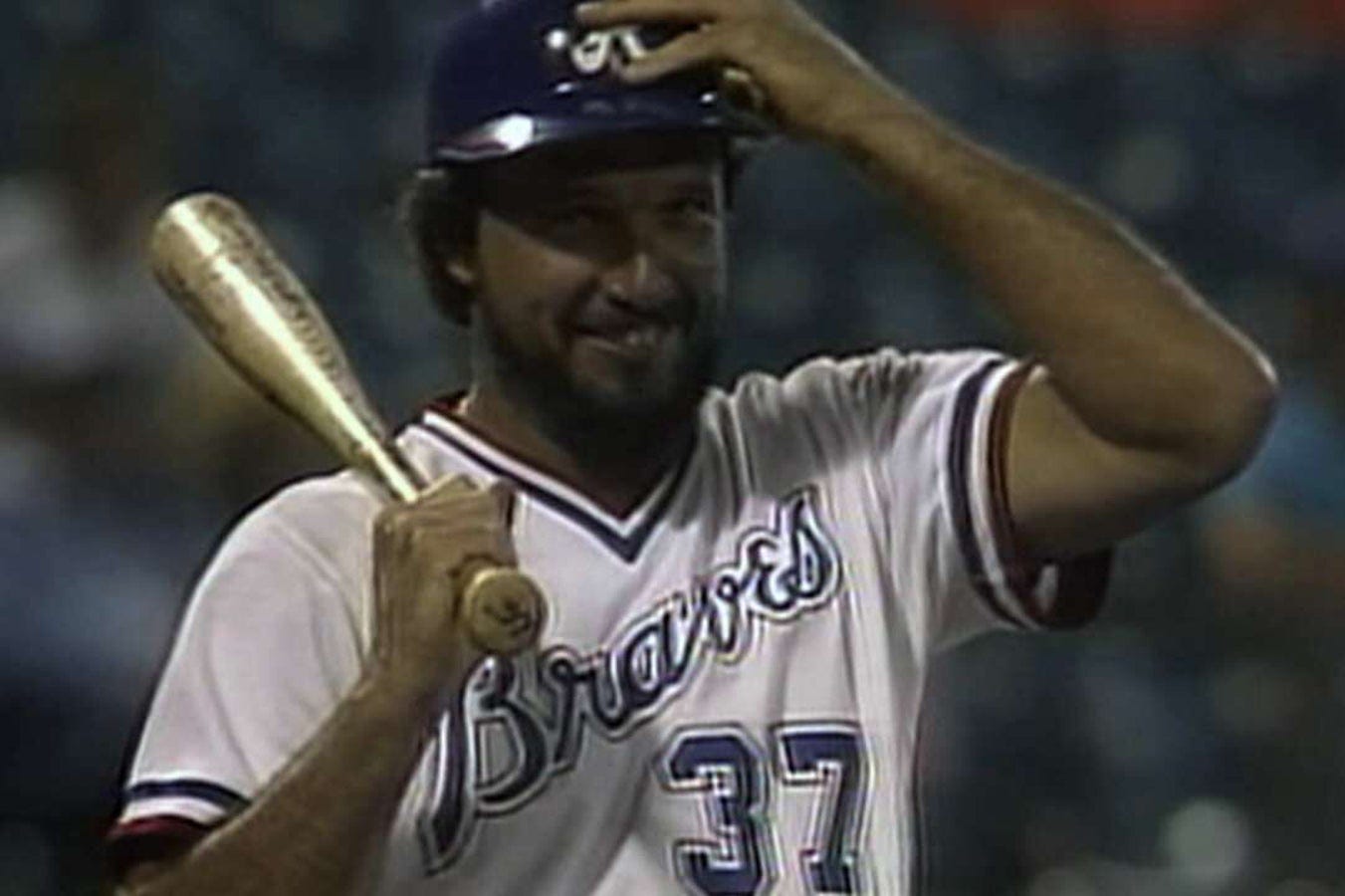
Camp watched strike two, which had caught a piece of umpire Terry Tata’s “after-hours” zone. Now Sterling sounded like he was starting to pack up his things. “It’ll be an 0-2 pitch.”
Camp took another swing from his heels—and hit Tom Gorman’s forkball as hard as he’d ever hit a ball in his life. “Deep left!” Sterling cried. Left fielder Danny Heep threw up his hands, tossing away his glove. In center field, Lenny Dykstra sunk to his knees. Sterling managed to sound both incredulous and exhilarated: “I don’t believe it. I don’t believe it! Rick Camp. Rick Camp!”
Camp was all business as he rounded the bases. Ernie Johnson laughed. “If you only knew,” he told the audience, “on the Braves, we kid Rick Camp about his hitting more than anything.”
It was considerably quieter in the Mets’ booth after Kiner called the home run. Finally McCarver broke the silence:
Well, these fans thought they were going to see some fireworks tonight. Rick Camp’s first major-league home run has re-tied this ballgame.
“I mean, that is the most improbable act,” Sterling said. “I mean if you told me that John Sterling’s going to run for president and win, that wouldn’t be any more improbable. That’s the most amazing thing that’s ever happened in baseball. I’m telling you the odds on that have to be a million to one. Ten million to one.”
“Rick Camp had struck a blow at the order of the universe,” Gerry Fraley wrote in the Journal. “He took his free-wheeling swing and proved that all things were possible.”
Camp returned to the mound for the top of the 19th inning. He faced Gary Carter, who singled again. After a sacrifice and an intentional walk, Knight, the Mets’ third baseman, doubled in a run that gave the Mets another lead. “I don’t think I’ve ever been more excited about one base hit in my whole career,” Knight said.
The dominoes began falling. Another walk, a single, an error. Three more runs. Second baseman Wally Backman drove in a fifth run with the team’s 28th hit, a team record.
By then it was past 3:45 in the morning. Surely it was over, but the fans—and the players—had seen too much to make assumptions. The dugout benches were unusually crowded; normally a steady stream of players would have left for the clubhouses, but on this night, “No one wanted to miss all the weird things happening,” Howard Johnson said. The fans kept their seats, too. Whatever happened, they knew they’d want to be able to say they’d stayed until the end when they told the story of this game any number of times over the rest of their lives.
Tom Gorman was finally out of the game, subbed for a pinch-hitter, Rusty Staub (another veteran looking a little portly to David Letterman’s eyes). But since the Mets had taken the lead before Gorman was removed, he was in line for a win to go along with his two blown saves.
Requiring one more pitcher, the Mets had no choice but to dip into their starters, and Ron Darling made his first relief appearance since his days pitching at Yale. Darling got a groundout to open the inning but another routine ground ball rolled between Keith Hernandez’s legs. He made no apologies. “I was so exhausted, I could hardly move.”
The next batter flied out, but Darling walked Dale Murphy and Gerald Perry to load the bases. Terry Harper hit a two-run single, making it 16-13. No crowd had ever been so happy to see their relief pitcher step into the batter’s box with two outs. “We want Camp! We want Camp!”
“I was more nervous with Camp up than I would have been if it was Willie Stargell,” Ray Knight said.
Ron Darling kept his cool. “I couldn’t let him hit another one,” he said. “It was no time to pick away at the corners. I threw the ball as hard as I could right down the middle.” Rick Camp swung away, but Darling had beaten him, and the Braves.
It was 3:55 a.m.
The Braves/Mets game on July 4/5, 1985 yielded a bumper crop of outlandish facts and figures.
Six hours and 10 minutes, the longest single game in history, with the latest ending time. Adding in the rain delay, it took eight hours and 15 minutes to determine a winner.
Ten players were on the field for the entire game, including Dale Murphy, Gerald Perry, Wally Backman, and Lenny Dykstra. The latter two had 11 at-bats.
Keith Hernandez called Tom Gorman the night’s “hard-luck winner.” With two blown saves, six innings pitched, and a win, it was a difficult performance to process. “I think I saw it all tonight,” Gorman said. “I should have saved the game. I should have won it. I should have lost it. It’s the weirdest game I’ve ever seen.”
In the clubhouse, a reporter reminded Rick Mahler that he had started the game and Mahler seemed almost surprised. “Did I?”
The Fifth of July fireworks began above Atlanta Fulton County Stadium at 4:01 in the morning. According to the Braves’ PR director, Wayne Minshew, there was no question about whether it was too late to use them. “As long as there were people at the game, we were obligated to fire them off, I thought.”
Less than an hour before dawn’s early light began creeping up from the east, 1500 pounds of fireworks were sent skyward, waking up the whole neighborhood.
The team received “about thirty complaints,” according to Minshew, and the area police precinct passed on several more. The Braves took those lumps with no regrets. They had promised their fans fireworks—and a promise was a promise.

If you enjoyed this baseball story and want to support Project 3.18, consider becoming a paid subscriber.
You can also really help us by sharing this feature on socials or restacking it here on Substack. Publishing a story is how we get on base; please help spread the word and drive us home.
A few weeks later, Terry Forster appeared on the Late Show, eating a sandwich and tossing an entire routine of memorized jibes at the host who had mocked him. He and Letterman buried the hatchet with a cooking segment in which Forster made tacos. The pitcher later recorded a “novelty song” titled “Fat Is In.” We can’t comment on his singing in 1985, but Terry Forster’s pitching was pretty good: He finished the season with 59 innings and a 2.28 ERA.
Fantastic retelling of an incredible game. (Heads up: you wrote that HoJo hit a home run to make it 8-8 in the 13th, he made it 10-8).
I love these stories. I was aware of this game, but not all the nuttiness around it. And fireworks at 4:01 am? Amazing!