


Welcome to Project 3.18, where a fan-first writer tells strange and surprising stories from baseball history and culture.
If you enjoy what you read today, please subscribe to receive our free feature stories in your inbox. And if you’ve been here for a while, we could really use your support as a paid subscriber. Paid subscribers receive access to exclusive content and help keep this publication going and growing.
This is the second part of our story on pitcher Kevin Hickey, who went from softball on Chicago’s South Side to a walk-on tryout to a professional contract in less than a year. We pick up after three lean seasons in the minor leagues, when Hickey earned an invitation to spring training in 1981 and resolved to make it count.
Here’s Part 1, if you missed it.

On February 25, 1981, Kevin Hickey turned 25 years old on a cot in the clubhouse at Payne Field.
It had been a week since Hickey accompanied the White Sox’ equipment manager, Johnny McNamara, from Chicago to Sarasota in a rattling truck loaded down with gear. Short on cash, the pitcher had offered to help drive the team’s bats and balls south in exchange for a free ride (and a refund of his team-issued plane ticket).
When the truck arrived in Florida, there were still two weeks until the team’s block of motel rooms opened up, but Hickey hadn’t come so far so cheaply to splurge out-of-pocket on a motel bed. He borrowed a cot from somewhere and set it up in the small, wooden ballpark clubhouse.
Waiting for camp to open, he worked out with a few players who lived in the area in the offseason. Other times he got up early, put on his major-league White Sox uniform, and exercised alone, running sprints in front of 4,000 empty seats and dreaming.
Everything about Hickey’s journey to professional baseball had been unconventional, but by this point he was happy to embrace it. Without ever pitching in AAA, he was determined to make the major-league club. Why not?
I have talent and I want to put it to use instead of saying, “I could’ve done this, I could’ve done that.” I can always say that I tried. The White Sox have been very fair. They won’t lose me in the shuffle. I think I can make it. It will take hard work and breaks, but it can happen.
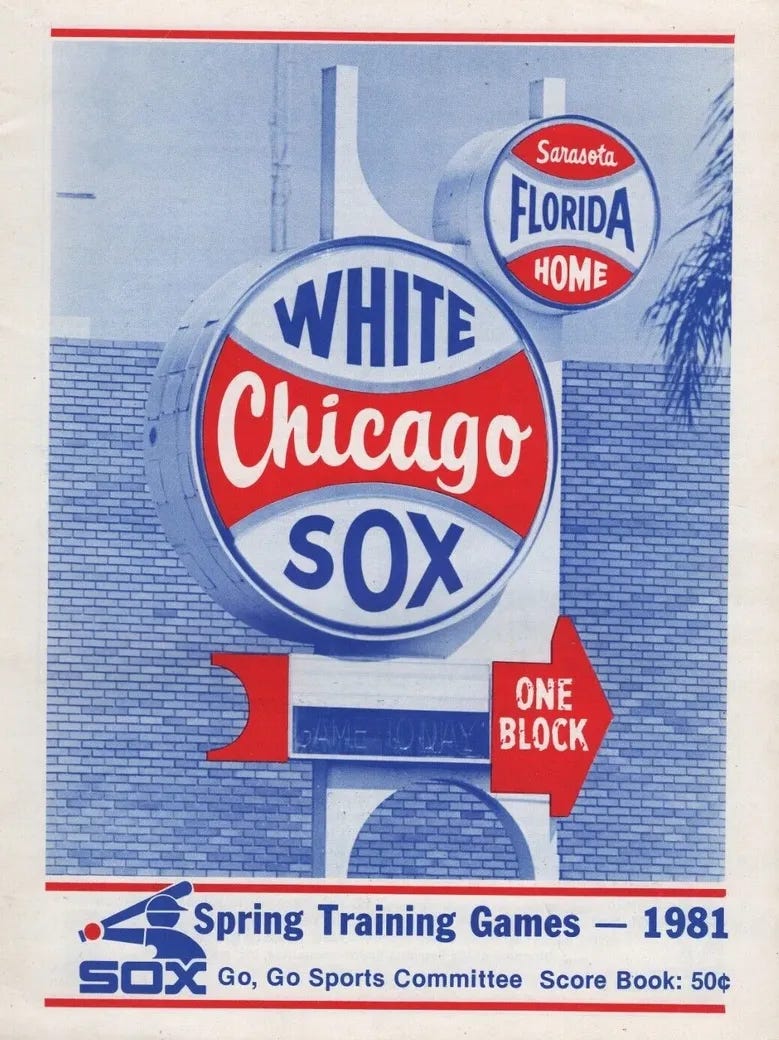
Since he first picked up a hard ball, Hickey had been a starting pitcher, but the White Sox rotation was full and his only chance to make the roster was as a reliever. So, he relieved. On March 15, Tony LaRussa called Hickey into a 2-2 game against the Boston Red Sox. The first two batters were bit players in the Red Sox’ system; Hickey dispatched them easily. The next batter was Jim Rice, a right-handed boogeyman. The major leagues were full of Jim Rices, and LaRussa wanted to see how Hickey handled one.
“I had butterflies, I admit it,” Hickey said, seeing that particular batter digging in against him. In 1977, when Hickey tried out for a minor-league contract, Jim Rice was an All-Star. “But you can’t worry that it’s Jim Rice up there. You have to have confidence in yourself.”
He threw a slider inside and Rice stroked it to left for a single. Hickey maintained his composure and got the final out, passing the test. When the White Sox scored in the bottom of the inning, he received his first win at the major-league level. LaRussa put him in another relief spot a few days later, also against the Red Sox, and he shut them out for three innings.
Logically, the manager reasoned, Hickey was looking at a year in AAA Edmonton. “Not many guys jump from AA to the majors.”
Thanks to general manager Roland Hemond, who was forever collecting lottery-ticket arms, Hickey had plenty of competition in camp. “Let’s face it,” another bullpen candidate said, “there are too many good pitchers here. Somebody is going to be unhappy.”
One thing he had going for him: the White Sox needed a left-handed reliever, and the incumbent, Guy Hoffman, was falling apart, giving up 12 runs in 14 innings. Meanwhile, Kevin Hickey was the best-performing pitcher in camp.
“He just kept surviving,” White Sox pitching coach Ron Schueler said. “One by one every left-hander ahead of him fell by the wayside. Kevin only had one bad outing, and we did everything we could to get him rattled.”
LaRussa warned reporters not to be fooled by Hickey’s inauspicious beginning:
People always ridicule the tryout camp, but we signed him right off the dad-gum1 camp. [His delivery] was very crude, he needed a lot of work, but he had the ability. He’s made a lot of improvements. It’s a tough nut to crack, but it’s not a situation where there’s no way he can make it. He can.
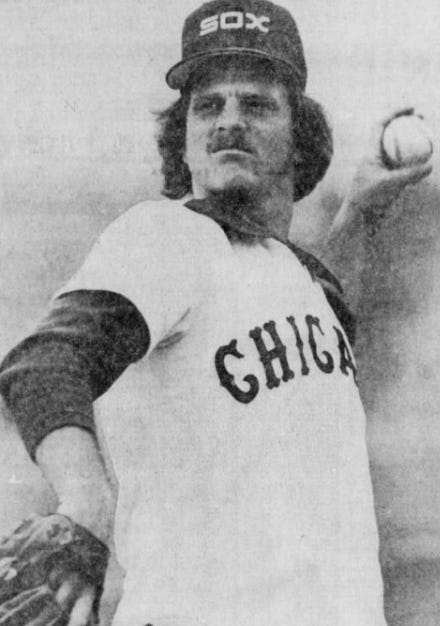
By April the crowded practice fields began thinning out. Eight pitchers, including four starters, were seen as certain to make the Sox’ roster. All four of the relievers in that group were right-handed. “I was the ninth pitcher,” Hickey said, “and the only way I was going to make the team was if they carried nine pitchers.”
LaRussa was reluctant to make a decision. Maybe he could get by with eight pitchers, for a few weeks, at least. He wanted to see how Hickey handled this home stretch of purgatory. Three days before the White Sox opened their season in Boston, Hickey had a 0.53 ERA, still the best number in camp. In 16 and ⅔ innings, he allowed seven hits and one earned run.
On April 7, after a practice, Ron Schueler pulled him aside. “Hick, stick around. Tony wants to see you.”
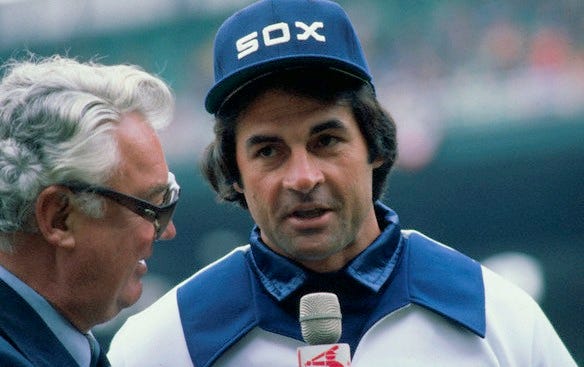
Hickey had seen some of the fringe guys cleaning out their lockers, put out of their misery by a grim-faced manager. He blanched. “Am I going down?”
“Just stand here,” Schueler said.
Hickey studied the coach’s crossed arms and stern expression. “I thought that was it. I’m going down.”
LaRussa came over, unsmiling and nonchalant. “Get your bags packed. You’re going north with us.”
The ninth and final White Sox pitcher ran circles around the practice-field mound for a minute and then peeled away to find a phone and call his parents. “He was like a three-year-old at Christmas,” Schueler said.
“This is the best feeling in the world,” Hickey said. “I’m getting to go home and play for the White Sox at the same time. It’s nice to be packing for the big leagues.”
Watching Hickey celebrate, LaRussa might have smiled. “When the spring began, people called him a dark horse, but that was a little too favorable.”
In his first major-league bullpen, at Fenway Park, Hickey was constantly in motion, tapping his foot or slapping his glove, looking everywhere and talking a mile a minute. “He made me nervous,” Schueler said. Hickey got warmed up once but was not called into either game in Boston. Tony LaRussa, noted sentimentalist, probably wanted to let the kid debut at home.
On Sunday April 12, Hickey’s brothers, Jimmy and Tommy, picked him up from the airport in Chicago. The three went straight to Mr. Mike’s, the neighborhood tavern that launched Kevin Hickey’s career as a 16-inch softball star. His picture was taped up in a place of honor on the mirror behind the bar and banners were strung up welcoming him home. The crowd inside gave him a standing ovation.
Over beers (he had a club soda with lime) there was much talk of the Milwaukee Brewers, likely to be the first team Hickey faced as a major leaguer. He mentioned hitters Ben Oglivie and Cecil Cooper, both left-handed: “They can really crush the ball…” He said that more than once.
The next day he borrowed his brother’s car to drive to practice at Comiskey Park. Returning to the family home in Brighton Park for dinner, 50 kids intercepted Hickey in the driveway. He signed autographs but the crowd never got smaller. He missed dinner.
The morning of the home opener was sunny and mild, with temperatures in the 50s. The old ballpark had a fresh coat of paint and a host of new faces. The White Sox had been overhauled; only two players, outfielders Chet Lemon and Harold Baines, returned to the positions they’d left at the end of the previous season. Roland Hemond had acquired outfielder Ron LeFlore and power bat Greg Luzinski, another Chicago-area native getting a chance to come home and play. The White Sox had even made their first big splash in free agency that offseason, signing former Red Sox catcher Carlton Fisk to a five year, $3.5 million dollar contract.
Fisk’s deal was the work of the White Sox’ new owners, partners Jerry Reinsdorf and Eddie Einhorn. Their predecessor, Bill Veeck, had sold the team after the 1980 season. Veeck had made a career of running teams on a shoestring and occasionally outsmarting the rest of the pack, but free agency had exploded his business model. In a bidding war, Goliath always won. Veeck spent most of his retirement warning of the ruinous effect of money on the national pastime (and sitting shirtless in his “outdoor office” in the of Wrigley Field).
Unlike Veeck, Einhorn and Reinsdorf had preexisting fortunes to draw on, and signing Fisk signaled a new era at the majors’ oldest park. The high-priced catcher made a grand entrance, opening the season against his old team at Fenway Park and hitting a three-run home run to seal a (White) Sox win.
With the excitement over Fisk and the team’s other acquisitions, Einhorn was hoping for a record turnout on the day of the home opener, and he got it. 51,560 people came to see Fisk, Luzinski, LeFlore, and Kevin Hickey, whose Brighton Park neighborhood was well represented down the left field line.
Hickey arrived at the park at 9:30 a.m. With time to spare, he checked to make sure the tickets for his father, mother, and two siblings were in order. He dressed and shagged fly balls in left field. When the Brewers appeared for their on-field workout, he drifted over to the stands, which seemed to be filling up with people he knew or remembered. He spotted an old English teacher who’d once given him a failing grade.
Hickey had spent many afternoons of his own youth on the other side of the same low brick wall, trying to catch a player’s attention and get an autograph. He never got one, so now he worked the crowd like an alderman, signing whatever he was handed and waving to familiar faces further back. A kid pressed in to introduce himself. “I’m from the neighborhood,” he said with evident pride. Just like you. Hickey solemnly shook his hand.
Don and Kathleen Hickey had only seen their son pitch (overhand) once before, for the semi-pro Midlothian Cardinals. Now Don was in and out of his seat, smoking and worrying. The White Sox had given out 40,000 miniature American flags for the game; Kathleen wrung hers back and forth in her hands until it fell apart.
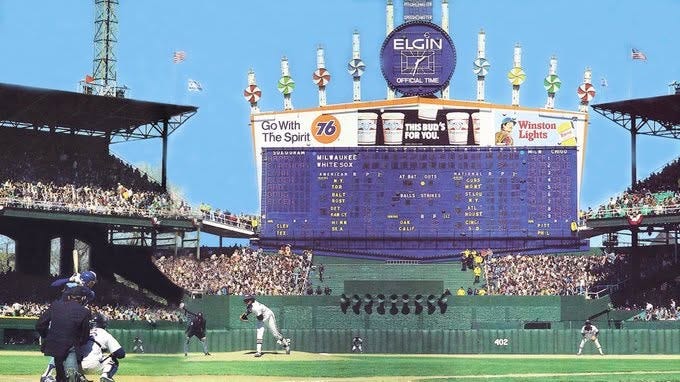
Luzinski hit a two-run single in the third inning. In the fourth, the White Sox’ bats torched Brewers starter Pete Vuckovich, whose day ended when Carlton Fisk hit a grand slam.
With all that run support, White Sox starter Ross Baumgarten sailed along, limiting the Brewers to one run in the first eight innings. By the standards of the time, his performance meant that despite having already thrown over 120 pitches, he’d have first crack at the ninth.
In the bullpen, Ron Schueler told Hickey to “pop 10,” throw 10 full-effort pitches. The pitching coach was careful to not imply Hickey was going to get in the game, which Baumgarten looked poised to finish. “I didn’t want him to get all nervous.”
Eagle-eyed fans near the left field bullpen cheered when Hickey stood up. “They’d had a few beers,” Hickey said. “I just figured I’d get loose and that would be it for the day.”
But Baumgarten couldn’t finish his game. He gave up a double and then a home run to Gorman Thomas, who blasted a mistake out of the park. LaRussa jogged out. The next three Brewers batters were all right-handed, but no matter. He tapped his left arm.
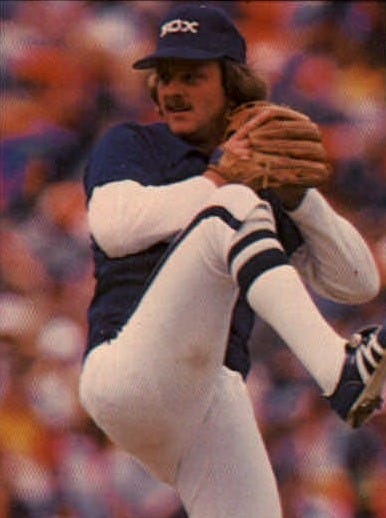
As he exited the bullpen and headed for the mound, Kevin Hickey heard the roars. It seemed like the biggest ovation a middle-reliever had ever gotten. He looked for his family behind home plate but couldn’t spot them. A few more warm-up pitches, and then his first batter, third baseman Don Money. With a 1-1 count, Money hit an easy grounder to short.
The next batter, Edgardo Romero, hit a soft comebacker. Hickey was an excellent fielder. His softball days had trained him to come off the mound with both hands up, ready to defend, and he threw Romero out with no trouble.
The final batter of the game was none other than Paul Molitor, but Hickey didn’t let himself worry about that. Hickey got ahead in the count and it seemed like the whole South Side was up and screaming. Molitor popped up to second base, where Tony Bernazard made the routine catch. Hickey jumped into the air and slapped his glove against his thigh. Bernazard handed him the ball. He’d earned it.
Two months later, on July 10, the White Sox led the New York Yankees, 6-4, at home. With no outs, the Yankees had runners on first and second in the top of the ninth. A dirty inning, a high-leverage situation, and two left-handed batters coming up. New York broadcasters Phil Rizzuto and Fran Healy didn’t recognize one of the pitchers warming in the White Sox’ bullpen.
Rizzuto: “Dave Revering will be the Yankee batter and we’ve got the tying run on first. Chicago has right-hander Ed Farmer and…and…a left-hander throwing.”
Healy: “That’s Hickey.”
“Uh-huh.”
“Kev-in Hick-ey.”
(Here, a pause.)
Rizzuto: “I used to get hickeys on my neck.”
Healy: “Very exciting.”
“I did. A long time ago.”
“Did you ever have a farmer on your neck?”
Tony LaRussa called for Hickey. Revering bunted, a bad choice against a former mushballer, who was always ready on defense. Hickey scooped up the ball and got the runner at second. Graig Nettles hit a sacrifice fly. LaRussa went to the closer, Ed Farmer, who got the last out.
Hickey earned his fifth hold, and the next day he’d get two batters in two different innings to earn his sixth. LaRussa had used him carefully that spring, but now it was summer and the training wheels were coming off.
The manager was getting tired of people underestimating Hickey (and, by proxy, his decision-making). “He’s got a major-league fastball that sinks,” LaRussa bristled. “He’s worked harder than anybody on the team. And we needed a left-handed reliever.”
LaRussa conceded that Hickey had “a hell of a story” to go along with his serviceable major-league arm. It was just a few miles from the neighborhood softball fields in Burroughs Park to Comiskey, but the diamonds might as well have been on different planets. Only person had managed to make the trip.
We think New York Times writer Ira Berkow put it best:
“If there were a longer shot than Kevin Hickey, it would have to be from Mars.”

Project 3.18 is independent and ad-free thanks to readers who subscribe.
If you enjoyed this story and believe baseball history deserves to be told this way, please consider a paid subscription. For roughly $1 per week, you can help us continue telling incredible baseball stories.
A week after Kevin Hickey’s pivotal outings against the Yankees, the Major League Baseball Players Association went on strike. The work stoppage wiped out more than a third of the season between June 11 and August 10. Hickey and teammate Ed Farmer reportedly kept loose during the strike playing catch in the alley behind the Hickey family home, drawing appreciative crowds.
When the strike ended, the White Sox’ pitching faltered and the team slipped from second to third place and stayed there. Hickey finished his first major league season with a 3.65 ERA in 44 innings and three saves, but as a reliever in his mid-20s, the strike cost him crucial development time, a loss he never really got over.
There’s more to say about Kevin Hickey and his remarkable life in baseball, but for now let’s leave him here at the top of the mountain in Chicago. Roland Hemond always felt this was Hickey’s defining moment, when “a South Side kid got the most out of his ability” and used it to make good.
Over on Clear the Field:
Is it “pop,” “soda,” or “coke”? Does it really matter when you’re an umpire and a glass bottle of said carbonated beverage is being thrown your direction? In our latest episode, Ted and I set up a particularly fizzy baseball forfeit.

A great story made much better by the Fran Healy-Phil Rizzuto exchange.
A great 2-parter, Paul. I see you pictured White Sox starter Ross Baumgarten (not Baumgartner), who ironically was also a Chicago-area kid: he went to the same high school I did: New Trier East, in Winnetka.