


Welcome to Project 3.18, a free weekly publication where a fan-first writer tells strange and surprising stories from baseball history and culture.
When the Wright brothers, Wilbur and Orville, flew the first true “aeroplane” in December 1903, they opened a new chapter in human history. With Orville at the controls, the first engine-powered, heavier-than-air flyer took off, flew for 12 seconds, and landed in a world that would never be the same.
Only a handful of people saw that first flight. News from Kitty Hawk was slow to get out and initially downplayed. The brothers were notorious for refusing to let journalists or large audiences observe their tests. It would take them years to iterate their way to an craft that was capable of sustained flight and reliable enough to market and distribute. As a result, most Americans in the 1900s saw as many airplanes as they saw dragons.
Pilots were even harder to make, requiring months of expensive training at what was initially just one Wright-backed school. It was not until the 1910s that there were enough planes and pilots to bring the skies of America to life.
Around that same time, the Wrights added a new feature to their machines: a passenger seat. What had once been the exclusive domain of inventors, mechanics, and daredevils opened up to anyone with sufficient bravery and the right connections (or sufficient cash).
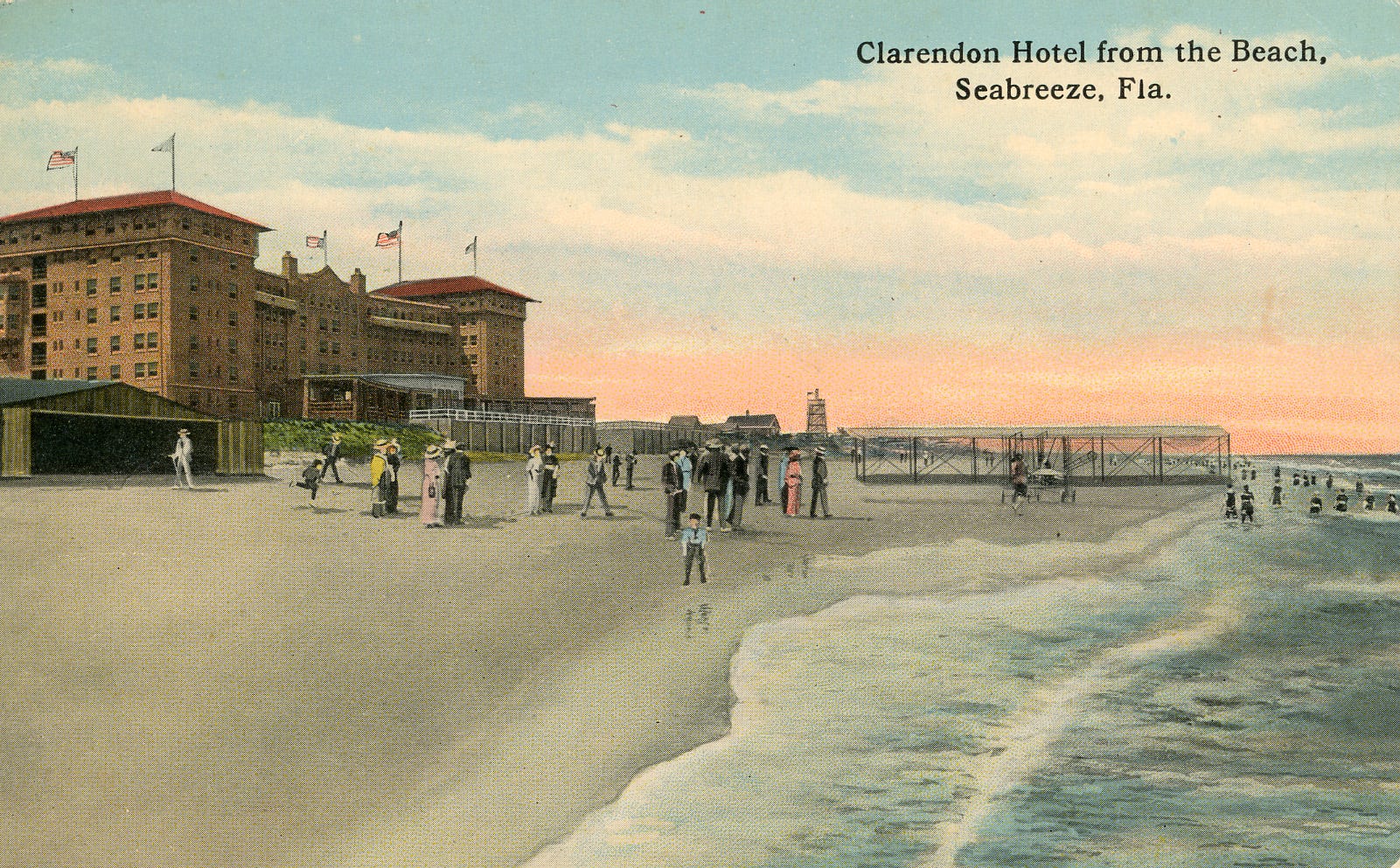
The white-glove Hotel Clarendon, perched on the edge of the sands of Daytona Beach, Florida, immediately saw the potential in that second seat. In 1912, the resort contracted with the Herring-Burgess aircraft company, renting both an airplane and someone who knew how to fly it. The plane was a Burgess-Wright Model B. Mass production was still a long way off—the Wright Company factory could produce just a handful of planes each month—and the brothers got around the bottleneck by leasing their designs to companies like Herring-Burgess for a cut of the profits.
The company built a hangar facility a half-mile south of the hotel, and one of the owners, a designer and early pilot named Starling Burgess, tested the plane five times. Surviving this, he declared the craft fit for commercial use, handing it off to a pilot-in-residence named Phil Page. The plane, equipped with both skids and wheels, could take off from and land on the beach itself.
The Wright Model B was nearly nine feet tall with a wingspan of 39 feet and weighed 800 pounds before passengers. It had a maximum speed of 45 miles per hour but cruising speed was closer to 40. The plane had a range of 110 miles, but Daytona exhibition flights tended to stay much closer to home.
There was no cockpit or windscreen. Just a few years later planes with noses and front propellers would make earlier efforts like the Wright B obsolete, but between 1910 and 1914 the sawed-off craft owned the skies.
Riding as a passenger on a Wright B was a stunt in and of itself. Passengers were literally strapped on top of the wing, next to the pilot. They weren’t going to fall off, but it was a little like riding a horse without a saddle. Women going up had to have their long skirts and dresses tied around their legs for purposes of modesty.
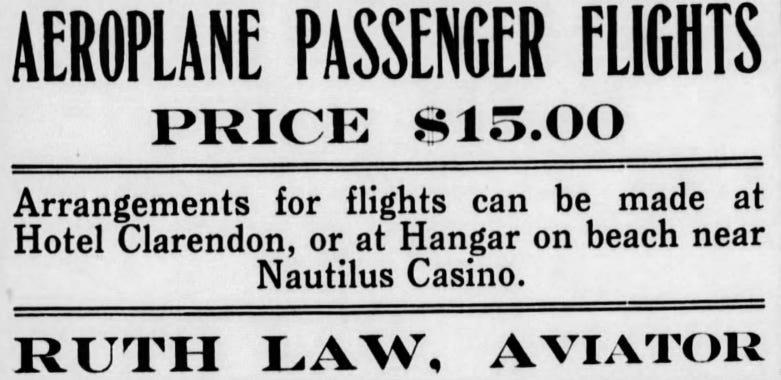
An excursion in the hotel’s rented plane was extremely expensive by the standards of the day. A 20-minute ride up to around 500 feet cost $15, about $500 today, but the hotel guests, mostly ultra-rich snowbirds spending their winters in Florida’s gentler, fruit-bearing climate, could afford to pay. The flight attraction was a success, but three years later, in 1915, there was a new pilot at the controls:
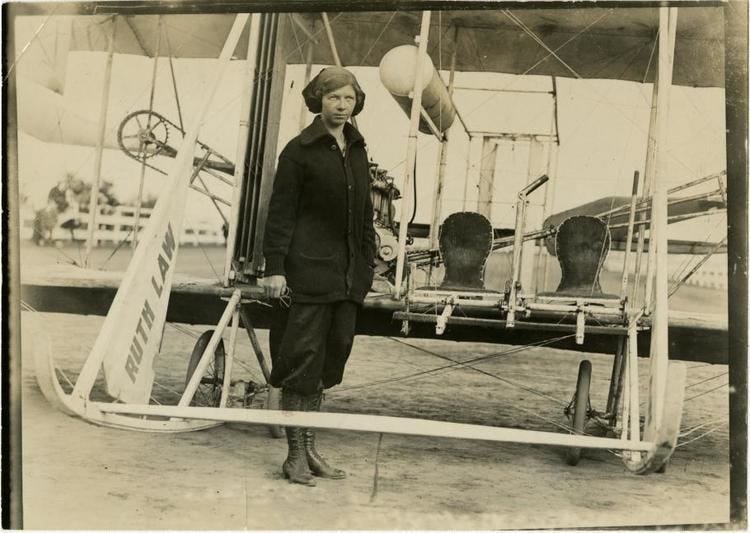
As a kid in Massachusetts, Ruth Bancroft Law played hard. Born in 1887, she was determined to keep up with her older brother, Rodman, whose amygdala was slightly undercooked. Rodman grew up to become a parachutist and a pioneering stunt performer in the fledgling film industry. Topping that career would take some doing, but Ruth Law saw a way to do it. Instead of going down, she would go up.
Law applied to the Wright Flying School in Long Island, New York, but Orville Wright himself reportedly turned her down, feeling that a woman could not possess the necessary mechanical aptitude for the job. She’d just been rejected by one of the most famous men in America, but Law had extensive practice ignoring authority figures. “The surest way to make me do a thing is to tell me I can’t do it.”
Some of the School’s earlier graduates were more accommodating, perhaps because they needed the cash more than the Wrights did. Law received both flying and mechanical training from two pilots, Harry Atwood and Arch Freeman, who ran their own flight school in Massachusetts.
The mechanical aspect of the instruction was as important as taking off and landing; many early pilots had no support crews, especially when they were away from their base of operations. They had to know what was wrong with their planes and how to fix them. The good mechanics lasted longer.
Law was an excellent mechanic. She could diagnose a potential problem with a plane’s engine by ear. “An old German mechanic taught me a lot about engines,” she told a writer in 1958. “He had me grinding valves until my hands blistered, and it seems I was always taking a magneto apart and putting it back together. When something went wrong with our struts, we wouldn’t send to the factory for a new one. We’d just sit down and whittle it ourselves.”
She was also daring, even more so than the baseline for her profession. During a training flight with Freeman she took their craft, another early Wright model, up to 7,800 feet before the instructor realized how high they were and put the nose down. Still a student, Law had come within 300 feet of the altitude record for a female aviator and taken Freeman up higher than he had ever been.
Law earned a pilot’s license in November 1912. She and her brother bought their own plane and she traveled around the eastern half of the United States performing exhibition flights. By 1914 she had taken over the wintertime operation at Daytona Beach.
In addition to giving rides, Law also gave flying “demonstrations,” in the same manner that Evel Knievel would later demonstrate how to ride a motorcycle. In a 1915 exhibition Law announced she was going to attempt an inverted vertical loop for the first time. A large crowd watched from the beach, half-terrified, half-enthralled. She completed the trick, then did it again.
Law was married by this point, to a man named Charles Oliver. Oliver was too nervous to try piloting himself, so he acted as Law’s manager, a job which would become more important in subsequent years. Though he helped his wife build a career as an aviator, he never quite got comfortable with it. The day she looped the loop in Florida, Oliver reportedly looked none too happy.
There was another act in Daytona Beach in the spring of 1915. The Brooklyn Dodgers had relocated their spring training camp from Augusta, Georgia, to Florida, making the move to join a loose but growing confederation of major-league teams working out relatively near each other in the Sunshine State.
The 1915 Dodgers are a deep cut of dead-ball era baseball. The youngest regular in the lineup was a 24-year-old outfielder named Casey Stengel, who is much more famous for being an elderly manager. They had a future Hall-of-Fame outfielder in Zack Wheat and a former Chalmers Award winner (MVP) in first baseman Jake Daubert, but the team’s strength today comes from its outstanding lineup of old baseball names, anchored by Hi Myers, Gus Getz, and George Cutshaw. The pitching staff was anchored by standout (names) like Nap Rucker and Wheezer Dell. The 1915 Dodgers came with 100% more Wheat, as Zack’s brother, Mack, a catcher, joined the club.
The Dodgers’ manager was as famous in 1915 as any of the players. Wilbert Robinson, 51 years old, was in his second year at the helm of a rising team that would win 80 games. Brooklyn would win the pennant in 1916. That same year the team was officially renamed the Robins in honor of their manager.
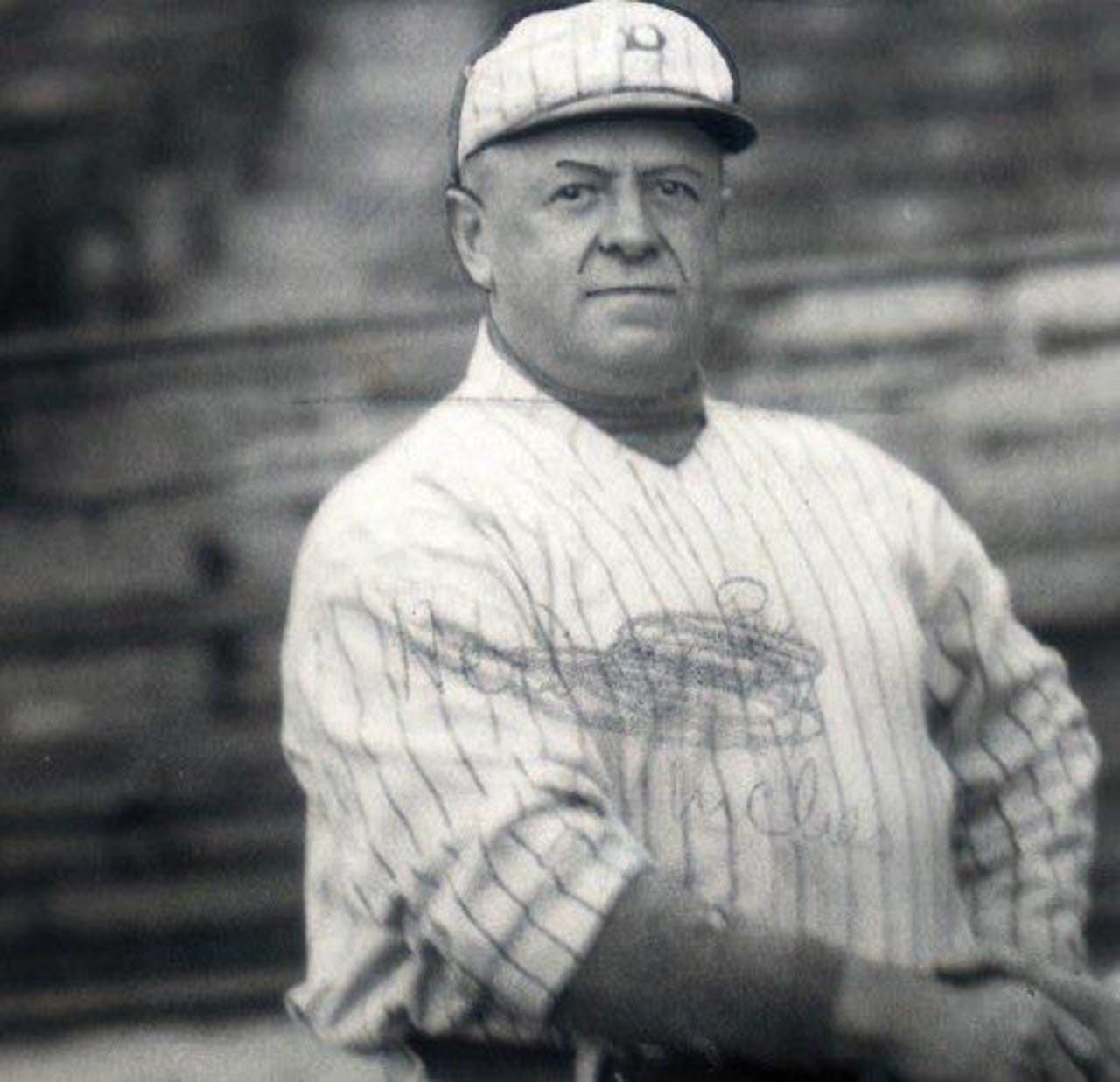
“A stout, tobacco-chewing veteran of the baseball wars,” Robinson managed the Robins for 18 years and won two pennants, in 1916 and 1920. Like many successful managers, he was a former catcher, who played for the famed Baltimore Orioles teams of the late 1890s. Robinson possessed legendary toughness; he once caught five official games played in two days—a tripleheader followed by a doubleheader. He began the practice of always setting up just behind the hitter, no matter the situation.
While modern analytics have not been kind to Robinson, and many other dead-ball era catchers, he played in 1,371 games and helped Baltimore win three pennants. That, plus his 2,818 games (setting aside ties, he finished exactly one game over .500) and two pennants as a manager, is surely enough to merit the place in Cooperstown “Uncle Robbie” was awarded in 1945.
Robinson and his fledgling Robins would train at a ballpark that had been renamed “Ebbets Field” in honor of the team president, Charles Ebbets, whose vanity seemed to be growing by the year. The Dodgers’ major-league park in Brooklyn had opened in 1913 and it, too, was called Ebbets Field. To keep the spotlight where it belonged—on himself—Ebbets decided that he would have the honors of throwing out the first pitch of the spring. And he’d do it from an airplane.
It wouldn’t have taken long for the Dodgers and Ruth Law to cross paths in Daytona Beach. She was already a local celebrity and would have been flying in the vicinity of their playing field all the time. Surely they would have wanted to meet the woman at the controls, and surely she would have wanted to meet a troupe of compellingly named ballplayers.
By early March the two parties were acquainted enough that Charles Ebbets had his big idea. The scheme to use Law to throw out a first pitch might have been inspired by another stunt the aviator had recently facilitated. A sporting goods salesman or manufacturer had used his $15 ride to drop golf balls onto Daytona Beach during the flight and get some publicity out of the unique giveaway. The Dodgers’ players heard about this (they may have seen it), taking particular interest in what kind of crater a dropped golf ball left in the sand. As with the golf balls, Ebbets’ idea was merely to drop a baseball down into the ballpark. Nobody was talking about catching anything. Not yet, anyway.
The spring “season” was to open on March 8 with a game against the baseball team from nearby Stetson University. There would be a parade of the players, a marching band, a flag raising, and “other interesting features,” according to the Daytona Daily News:
“President Charles Ebbets is to make an aeroplane flight with Ruth Law, if air conditions are right, and drop the first ball from the flying machine.”
It seems as though air conditions ended up wrong. A small report on March 10 says Law was unable to fly due to high winds. She and her husband retreated to the hotel’s on-premises bowling alley. The ceremonial first pitch was thrown by the mayor, Henry Titus, who surely had never been such a disappointment as he was that day.
The Stetson game was played the next day and the weather seemed to be better. Ruth Law was back in the office, treating customers to a grand view. “She drove her aeroplane directly over the center of the park amid the cheers of the spectators, and returning banked the machine in plain view of the grandstand,” giving the several hundred people there a free show.
The game was “very much of a joke.” The Stetson players were badly outclassed and the Dodgers seemed able to score at will. In the rare event that a Stetson player reached base, the Brooklyn catcher’s snap throws picked them off easily. After two innings of this Robinson halted the competition and declared the Dodgers would spend the seven remaining innings scrimmaging amongst themselves.
Ruth Law and her Wright B had not been able to take part in the opening festivities, but an idea had been planted, and it grew quickly.
On March 12 the Dodgers were still waiting for action. Real competition was coming in the form of the Birmingham Barons, an upper-minor team in the Southern League, but in the meantime Brooklyn had to play “a team composed from the hotel employees.” That game went about as you’d imagine, but afterward the players got an intriguing offer. Among the elites wintering at the Clarendon was George Johnson, a millionaire shoe magnate. Johnson was so delighted to have baseball practically at his cottage doorstep that he decided to buy every Dodger player and staff person a ride in Ruth Law’s airplane.
There was hardly a stampede to the hangar. Robinson was offered the first trip and turned it down flat. Shortstop Ollie O’Mara (solid name) also declined. A majority of the players were reported to be hesitant or on the fence. “It appears as if Miss Law stands a poor chance of collecting any fees from Mr. Johnson,” the Daily News observed.
Casey Stengel would go on to fly thousands of miles in his life in major league baseball, but early flying was a different matter, he recalled. He described the Wright Model B as “a kite made out of a shirt material, pasted with glue and held together with wires.” This is pretty much what it was. So tentative was a pilot’s hold on the sky that the vertical and horizontal controls required constant handling.
At least one person among the Dodgers’ party was eager to fly, and he may have been the first one to do it. The team trainer, Frank Kelly, seemed like a natural. Many of Law’s passengers were so nervous they required her gentle assurances that she would fly low and land as soon as they requested. Kelly, on the other hand, climbed up next to Law and invited her to fly as high and fast as she wanted to go. Law took the plane out to sea, flying about a mile over the Atlantic Ocean before turning back.
March 13 brought grey and rainy weather. The day’s game against the Barons was canceled, but Robinson had the Dodgers working out at the ballpark that morning, practicing their hitting and fielding and ironing out the system of signs they would use that year.
Kelly was present, too, and as the players took batting practice the conversation around the batting cage (if there was a cage in those days) turned to flying.
The conversation also turned to stunt-catching. One account says the players were inspired by what was then the most famous stunt-catch in history: Gabby Street’s 1908 grab of a ball tossed off the Washington Monument.
The final ingredient might have been Law’s earlier stunt with the golf balls. A later account says Robinson and a group of players were out on the beach when Law’s passenger dropped the balls from the plane. Coming on one of these souvenirs, Robinson was not impressed with the crater it left in the sand. He also fancied himself “the greatest pop-fly catcher in history.”
“If somebody threw a baseball out of a plane,” he said, “I bet I could catch it.”
The players laughed, but old Oriole was serious. “Maybe not from as high as that plane was, but let somebody drop a ball to me from about four hundred feet and I’ll catch it.”
“If the ball hit you on the head it would smash your skull,” someone, perhaps Frank Kelly, observed.
“I never got hit on the head with a baseball,” Robinson said, “and I wouldn’t get hit on the head with one even if it was dropped from that plane. You wait and see.” It was a bet.
As he seemed to be the only one comfortable with the idea of flying, the parties agreed that Kelly would accompany Ruth Law and try to drop a ball down on the park’s pitcher’s mound, where Robinson would be waiting.
Perhaps by virtue of being the most recognizable name on this Dodger roster, Casey Stengel was often named as Law’s passenger in later accounts. For a period of time Stengel seems to have allowed that story to circulate, perhaps even spreading it himself. However, in every original account the passenger is Frank Kelly. Stengel set the record straight in 1956, saying, “for forty-one years I have received credit for an ‘achievement’ I didn’t accomplish.” He admitted that he had not wanted to go up and that Kelly had been “the patsy” who agreed to do it.
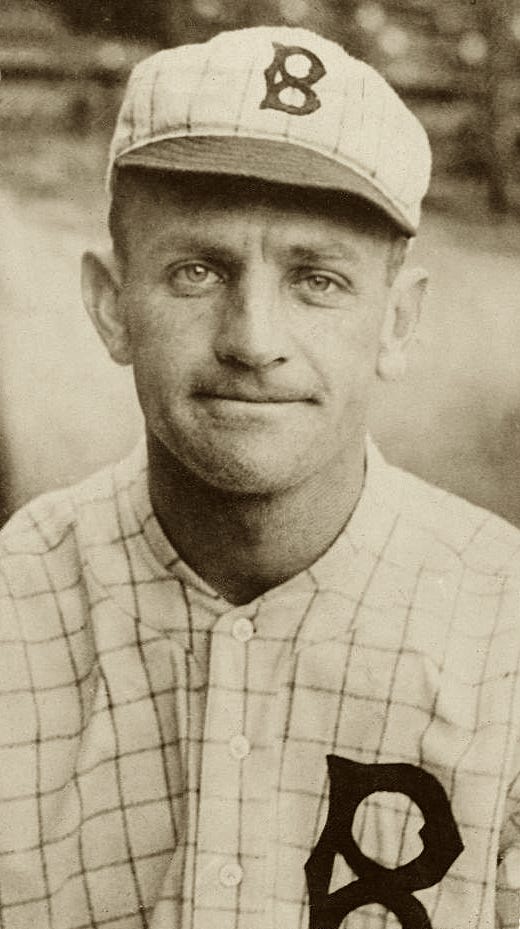
Stengel recalled that Ruth Law loved the idea of the plane catch. “She wanted the publicity, too.”
Flying in the 1910s presented one opportunity after another to do something that had done before and get your name attached to the feat. Other Wright B pilots became the first to deliver commercial goods (two 50-pound rolls of silk), the first to carry a skydiver, and the first to drop live bombs, in a demonstration for the Army. Being involved in the first plane-to-ground baseball catch would have appealed to a young aviator trying to burnish her reputation.
The plan came together in a rush, perhaps because Law was so booked for subsequent dates that it was now or never. Her calendar that day had been freed up by the wet weather. It was still raining on and off, and Law had never flown in the rain before–ever–but she decided this was as good a reason as any to check that box. She and Kelly made the trip to the hangar where her aircraft was waiting, ready to make some esoteric history. There was only one problem…
In all the excitement, nobody remembered to bring a baseball.

In the conclusion, the flyers improvise, a league gets its legend, and Ruth Law’s career soars to incredible heights before being brought down by friendly fire.

Over on Clear the Field:
In the interest of giving equal time, Ted and I tell a story from Arizona’s Cactus League. In 1971, spring training was the cradle of revolutionary thinking and poor execution, all courtesy of baseball’s chief instigator, A’s owner Charles O. Finley.

Great story, as always, Paul - I look forward to the payoff pitch.
Paul, where do you find these stories? Through a lot of reading and research! The undercooked amygdala! Ha! Ruth’s brother could have been named Daryl instead of Rodman. (As in “my brother Darryl and my other brother Darryl,” from Bob Newhart Show fame. She sounds like quite the character. I can’t believe you found another story that references the drop of a baseball from on high. Looking forward to part 2, as usual.