


Welcome to Project 3.18, where a fan-first writer tells strange and surprising stories from baseball history and culture.
If you enjoy what you read today, please subscribe to receive our free feature stories in your inbox. And if you’ve been here for a while, we could really use your support as a paid subscriber. Paid subscribers receive access to exclusive content and help keep this publication going and growing.
One of the things we’re proud of here at Project 3.18 is our series of deep-dives into the checkered history of major league baseball’s forfeits. Baseball has been forfeit-free for nearly 50 years, but back in the late 19th- and early 20th centuries, you could hardly go a year without a game falling apart in interesting ways. There’s a lot of dust these stories, but we blow that off and often find a tale that remains remarkably legible more than a century later.

In the middle of July 1916, two National League teams, the visitors from Brooklyn and the home team from Chicago played a four-game series in a ballpark on the city’s North Side.
The Brooklyn club was technically called the Robins, named after their well-loved manager, Wilbert Robinson, but also referred by older names: the Dodgers or even the Superbas.
A manager-derived nickname was something of a custom at the time, so the Cubs had one, too, unofficially. Their manager was Joe Tinker, so in 1916 the Cubs were often called “the Tinx.”
Tinker had recently pulled of the impressive feat of changing teams without having to move his office. In 1914, Charles Weeghman set up Chicago’s entry in a new, rival major league, the Federal League. Tinker became that team’s player-manager. He was one of the first “stars” to join the new league and his move inspired others to follow. The “Chi Feds” finished first in first place and outdrew the Cubs and the White Sox in 1914, a show of strength that hurried along a “peace settlement” that dissolved the Federal League after 1915. In the agreement, Weeghman was given the opportunity to buy the Chicago Cubs and merge the two teams, putting Tinker back in the uniform of his glory days.
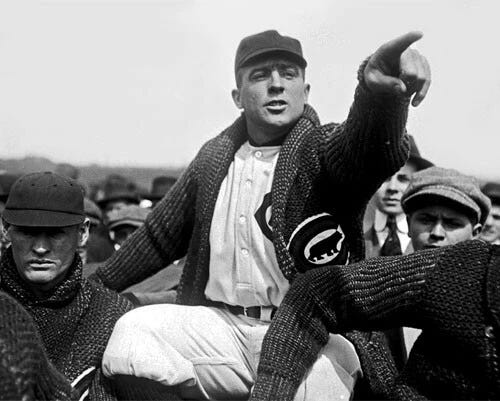
In the early 1910s, “Tinker to Evers to Chance” became one of the most famous scraps of baseball poetry in America, to the extent that even casual fans today probably recognize it. Six years later, the players immortalized in Franklin Pierce Adams’ poem, “Baseball’s Sad Lexicon,” were scattered. First baseman Frank Chance was managing in the Pacific Coast League. Second baseman Johnny Evers managed the Cubs in 1913 and was traded to the Boston Braves, where he remained a productive player until 1917. Only Tinker remained in Chicago.
The visiting Dodgers (we’re going to call them Dodgers for consistency purposes) were proof that times had changed. Brooklyn was a doormat during Chicago’s run in the early aughts, the Dodgers were in first place that July and on their way to their first World Series appearance. Their previous pennant, won in 1900, predated not just the World Series but also the existence of the American League.
Thomas Rice, the baseball writer for the Brooklyn Eagle, where he went by “Rice” (including the quotes), was traveling with the Dodgers on their long road trip, and he provided detailed (if not exactly neutral) accounts of the doings at Chicago’s North Side park, Weeghman Park. The series began on July 15 with a walk-off win for the Cubs. Catcher Jimmy Archer hit a two-run home run in the bottom of the ninth. Weeghman had taken to motivating his mediocre team with instant bonuses for outstanding performances, and he reportedly wrote Archer a check “before he could get his uniform off.”
The next day, the Cubs were down 4-1 in the bottom of the ninth. All seemed lost, but Chicago pieced together three runs against a parade of Dodger pitchers and sent the game into extras.
The Dodgers “girded up their loins” and manufactured three runs in the top of the tenth. Back came the Cubs, scoring three more runs with a “fury that drove 16,000 rooters into paroxysms of delight.”
After that, nobody could score. It began to get dark somewhere in the 14th inning, but the umpires, Ernie Quigley and Bill Byron, let play continue until many in the crowd (who could no longer see the game) were calling for mercy. In the 16th inning Byron’s voice pierced the gloom and declared a 7-7 tie.
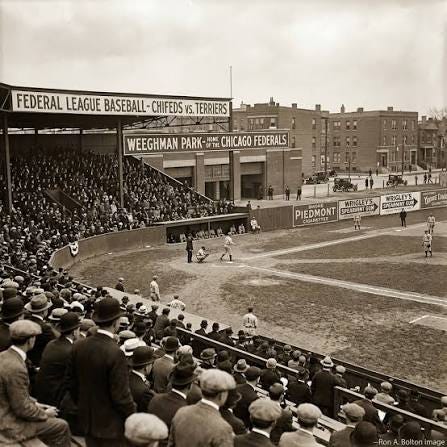
In the top of the 16th, with a runner on first, the Cubs’ pitcher, Hippo Vaughn, bunted weakly in front of home plate. Thinking the umpire, Byron, would call it foul, Vaughn didn’t move. Nor did the runner at first. Byron called it fair and despite some sloppy defense, the Dodgers doubled off two Cubs who had hardly budged.
The Cubs,“roaring and raving,” protested Byron’s decision, and their performance triggered a response from the grandstand crowd, some of whom threw their seat cushions onto the field in disgust or solidarity. But there were more dangerous missiles flying, too: Glass pop bottles, including one aimed in the general direction of Quigley, the field umpire, like a warning shot. In his write-up for the Eagle, Rice blamed the Cubs and their histrionics for inciting the fans:
Some day the childish, idiotic, boneheaded kicking by the Cubs is going to cause a riot in this town and an umpire is going to be seriously injured.
On July 17, a much tighter game was played at Weeghman Park, dominated by Brooklyn’s starting pitcher, Wheezer Dell, who helped put on a pitching clinic and helped his cause with a fourth-inning single that drove in a decisive run.
Afterward, Rice spotlighted more nonsense from the Cubs. As they took their final at-bats in the ninth, “the entire Cub outfit acted like maniacs,” tossing bats around and beating them against the sides and top of the dugout. The noise might have rattled Dell, who walked a batter and inspired the Cubs’ bench mob to get even louder.
That was enough for the umpires. At least one bench rabble-rouser was ejected by Quigley, working home plate, and soon Byron approached the Cubs’ dugout, where he was “greeted with abuse and a lemon.” As the two sides argued, a hurled seat cushion caught Quigley full in the face. The officials kept their focus on the players and eventually cleared the Cubs’ bench and finished the game.
The series was tied, 1-1-1, going into July 18 . It was a Tuesday afternoon game, with 5,500 people in the stands. Ernie Quigley umpired the field and Bill Byron worked behind home plate.


George McConnell started for the Cubs and Rube Marquard for the Dodgers. The Cubs nibbled away at Marquard, scoring runs in the second, third, and fourth to open a 4-0 lead. In the sixth inning Marquard was subbed out for a pinch-hitter, a move that keyed a 4-run rally off of McConnell and another Cubs pitcher. Tinker was forced to bring in the trusted Hippo Vaughn, who got out of it with a double play. The teams seemed spent by their back-and-forth, and the game was tied 4-4 entering the 10th inning.
In the top of the 10th, Hi Myers, leading off for Brooklyn, reached second base when the Cubs threw his routine groundout past first base. The next batter, Jimmy Johnston, safely bunted, sending Myers to third, and Johnson stole second. With no outs, the batter was Brooklyn shortstop Ollie O’Mara.
During O’Mara’s at-bat, the Cubs made a pretty daring attempt to pick off Myers, who had come noticeably far off the bag there. The resulting play was close, but Myers slid back, “on his face” around the third baseman and reached back to touch the bag before getting tagged. Quigley called Myers safe.
According to Rice, the umpire’s decision triggered “the usual rowdy rumpus by the Cubs.” As the Chicago players “beefed and raved and tore around,” Rice saw a seat cushion shoot past Bill Byron’s head, sailing almost to the mound. Byron went to the Cubs’ bench, where he was greeted by more cushions, but he was able to silence the players. He returned to the plate and told Vaughn to get on with it.
With a 2-2 count, Vaughn stepped off the mound. He complained that Johnston, on second, had the Cubs’ signs. “I had to go slow,” Vaughn said. “The signals were being tipped off to O’Mara, and we were trying to work up a new set.”
Byron was not moved by Vaughn’s difficulties and was surely worn out from the copious piles of beef the Cubs had been dumping all over Charles Weeghman’s jewel box throughout the series. He now reached his limit.
Vaughn continued to “dilly-dally” around the mound and Ollie O’Mara began leaving the batter’s box in kind. Byron warned Vaughn that he was delaying the game and reminded him that if he did not pitch, the umpire could call an automatic ball.
And that was true. Baseball’s pace of play was already a concern in the deadball era, when a two-and-a-half-hour game was considered an abomination, “outraging faithful housewives by keeping husbands at ballparks while dinners grew cold,” in the explanation of one writer at the time. To hurry along sluggish pitchers, who added most empty minutes, the leagues adopted Rule 33, which said:
The umpire shall call a ball on the pitcher each time he delays the game by failing to deliver the ball to the batsman for a period longer than 20 seconds.
A good rule in principle, but it never worked in practice because the umpires saw themselves as judges, not police. They hated being tasked with what was essentially police work and frequently just looked the other way.
After Byron threatened to invoke Rule 33, the Cubs’ shortstop, Heinie Zimmerman, who had been in the thick of the protests all through the series, yelled at Byron to get back behind the catcher and “empire de game.” Instead, Byron counted to 20 and called, “Ball three.”
Rice said the Cubs charged around Byron “as if he had set fire to an orphanage.” The writer watched, unsurprised, as the Cubs howled unprintable curses while “many more cushions shot out of the grandstand.” The writer said Joe Tinker was in the vanguard, “leading the yelps.”
The Cubs were objecting to what they saw as Byron’s inconsistent application of the rules. All day long pitchers from both sides had exceeded their 20-second allotment, but the umpire never so much as twitched, until now. Tinker was furious, and he “protested so vehemently” that Byron “ordered him to the shower.”
The ejected manager refused to move, but rather than wait for him to simmer down, Byron motioned to a startled police officer, seemingly the only one in the ballpark, and ordered the man to remove the Cubs’ manager.
The surprised officer nervously approached the party at home plate, but Heinie Zimmerman intercepted him and advised him that, as field manager, Tinker was in charge and could not be forcibly thrown out. The officer seemed glad to accept this reasoning.
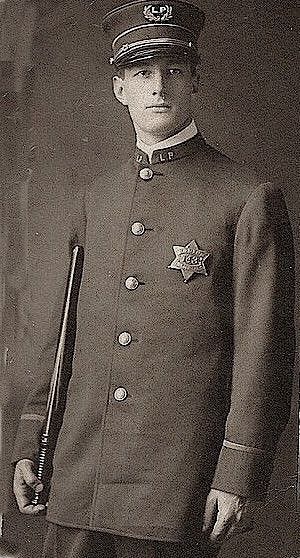
“All right,” Byron told the cop. “I call you as a witness, then. I have no protection, as the rules prescribe I should have. I am going to allow three minutes to take Tinker away or for Tinker to take himself away. If neither happens, I am going to declare the game forfeited.”
And then he took out his watch.
William Jeremiah Byron had several nicknames, too. Called “Bill” to his face, many people called him “Lord” behind his back, a nod to the 19th century British poet and a reference to the umpire’s highborn demeanor. The nod to a poet was especially fitting because Byron had a penchant for verse. He was famous for singing his ball/strike calls for the benefit of a crowd, and he was apparently even something of a poet himself. Whenever a batter protested after being struck out looking, Byron offered him a little rhyme:
Let me tell you something, friend
Before you grow much older–
You cannot improve your average, sir,
With the bat upon your shoulder.
Even before coming to the major leagues in 1913, Byron was known as one of the most imperious and confrontational umpires in professional baseball. He became the subject of intense loathing and abuse from fans, but didn’t seem to care. In 1916, umpires were just one generation removed from the two-fisted game of the 19th century, when some officials kept order by challenging unruly players to fights—and winning them. Byron was a throwback to those days. No one used the term “ump show” in 1916, but here was an original performer, a man who never walked when he could strut.
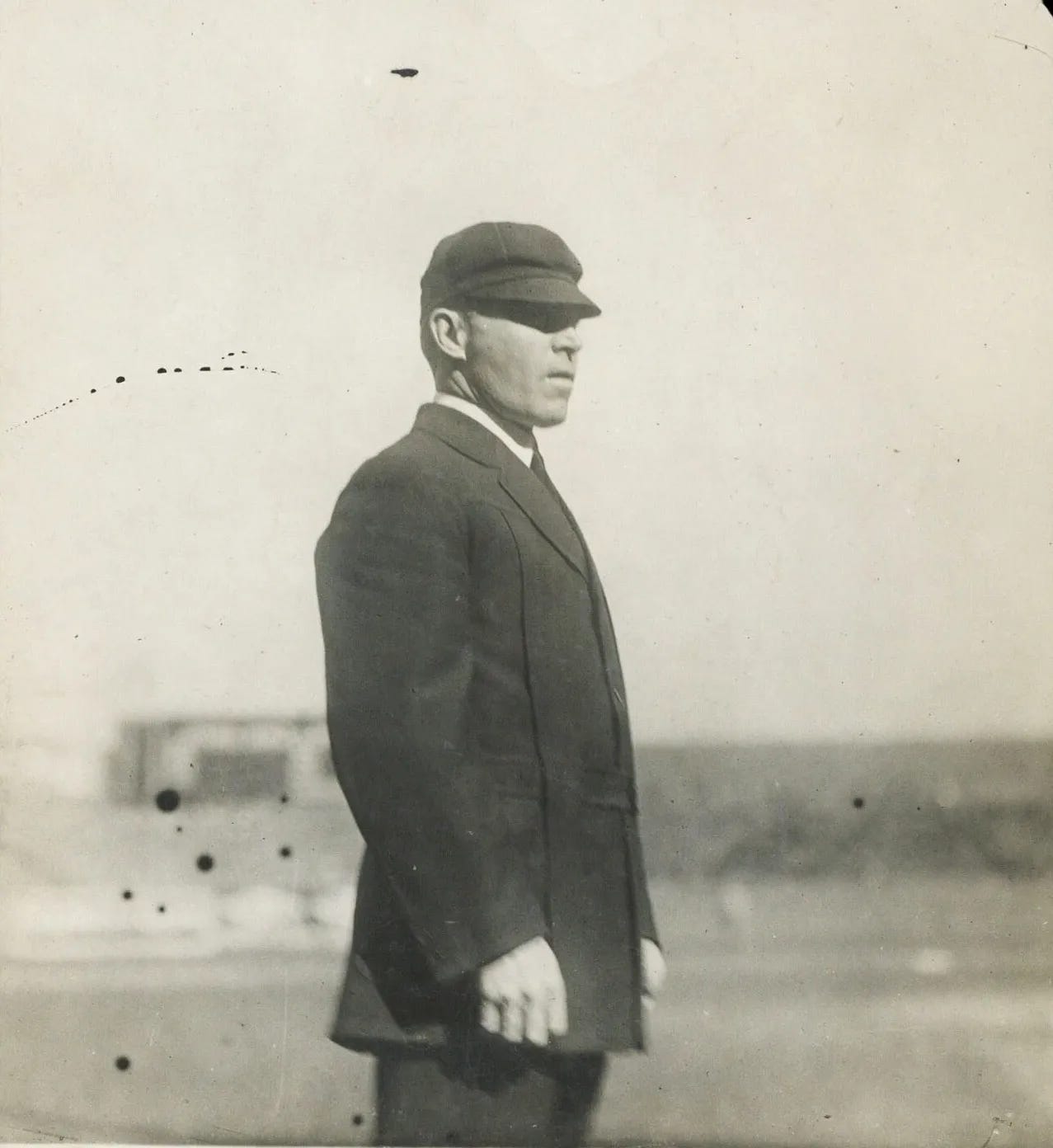
He was also famously trigger-happy: Byron led the NL with 24 ejections in 1916. The AL leader, Dick Nallin, had 11. He had a song for ejections, too. When a player approached the red zone, Byron would take out his brush and dust off the plate while singing “Someone’s going to the clubhouse…” When the line was inevitably crossed, the verse changed slightly: “Someone IS going to the clubhouse!”
And then there was that pocket watch. Byron was far from the only umpire to keep and produce a watch, but he often waved that watch like a red flag in front of an already angry bull and usually got a similar response. There is a reason Byron only umpired seven years in the majors before being “sent down” to work in the minors. Even the National League officials, it seems, did not enjoy watching Lord Byron’s ump show.
As Byron grandly studied his watch amid a sprinkle of seat cushions, Joe Tinker kept screaming, repeating over and over that Byron “didn’t have the nerve to call a forfeit.” Rice, who obviously took the umpire’s side in the conflict, said this was Tinker’s “prize bone play of the season.” Despite being in Byron’s corner, Rice called him “entirely devoid of tact.” He would certainly have the nerve to forfeit a game, and precisely three minutes later, he did, turning to address the crowd and giving Brooklyn an administrative victory.
The forfeit dropped the Cubs from fifth place to seventh in the eight-team National League. League rules stipulated that the Cubs organization would be fined $1,000 and their manager would automatically be fined $100—there were even stiffer penalties if Charles Weeghman tried to cover Tinker’s fine himself.
Tinker said relatively little after the game, other than that the Dodgers were stealing signs and he planned to appeal the forfeit and fines to John Tener, the National League president. Thomas Rice threw the gauntlet down in front of Tener in his typically colorful prose:
If Tener does not collect every cent of the penalty, then the NL should call a meeting for the end of the steamboat pier at Coney Island, wait until a school of sharks come along, and jump in.
Perhaps Tener was not a good swimmer, because not only did he uphold the Cubs’ fines on July 27, he issued several warnings to Cubs players, Heinie Zimmerman in particular, that they would spend the rest of the season under special surveillance. The president made a tour of all eight clubs to impress upon them that he was not kidding. If a player’s name showed up in an unflattering report from an umpire, suspension letters would fly.
Wrapping up his coverage of the stormy series, Rice theorized that Tinker, at the cusp of retiring as a player and trying to prove himself in the National League, was trying to cover up for the Cubs’ shortcomings “with bluff and bluster.” The team’s rowdy tactics were really Tinker’s campaign “of noise and intimidation to prove what a striver he is.”
But a forfeit was the opposite of success. It was a loss by fiat, a self-induced rake in the face. Whatever Tinker thought of his stand at home plate, in giving a game away, Rice said he had “fallen to the ridiculous.”
“And when a man does that, his goose is cooked.”
Just a few days after the forfeit, Tinker almost showed his cards. During a late-July series against the Cardinals, he gave Bill Klem, the NL’s senior umpire, a piece of his mind. These remarks were extensively quoted in national newspapers, perhaps because he’d also sent them in a letter to President Tener and shared the contents of that letter with the press:
Baseball is distinctly a fighting game, a red-blooded man’s game, a battle, a game of strife, and you remove that element and you ruin the game.
The Cubs could never have won the game from the Giants in New York in 1908, the game that gave them a pennant and made it possible for them to win the world’s championship, had the umpires possessed the power they have this year and used it. The Cubs were a fighting ball team and they won the game through sheer grit and nerve.
If a player objects to a decision, the umpires today threaten him with a fine if he persists. The players come back to the bench after a strike has been called or after they have gone out in a questionable play, and I ask them about it.
‘No, I wasn’t out,’ they will say. ‘Yes, the ball he called foul was fair,’ or ‘No, it wasn’t a strike.’
‘Well, you didn’t say anything?’
‘No, I have no desire to pay any part of the expenses of the National League,’ is the reply, and I can’t blame the players, for they are right.
In reaching back to the hallowed bygones of 1908 and lamenting the tyranny of modern-day umpires, Tinker was inadvertently signaling defeat. He and his generation had thrived in baseball’s teenage years, when strife and rebellion helped the game mature into an American cultural power. But the game had matured, and its field managers needed to grow up as well. The stars of the future would have to find a way to thrive on that stage without abusing the umpires—even the most obnoxious ones—and weaponizing the crowd. In his comments, Joe Tinker was admitting he didn’t know how to help them do that.
The manager’s goose was roasted, rotisserie style, over the rest of the season. His team won just 67 games, a major disappointment for the club that got to combine the best parts of the back-to-back pennant-winning Whales and the once-mighty Cubs. Tinker’s three-year contract, the one that had lured him to the Federal League in the first place, was up, and an influential member of the Cubs’ board of directors, William Wrigley Jr., pushed the organization to go in a different direction.
In 1931, a retired Joe Tinker mentioned the forfeit in an autobiographical series of newspaper articles, titled, of course, “Tinker to Evers to Chance.” He recalled Byron ejecting him by saying, “You are going right out through that hole there in the players’ dugout.”
“I lost my head completely,” Tinker wrote. “I told him, ‘If I go, we will all go together.’” He said he quickly realized what a foolish attitude this was, but it was too late: A few months later the Cubs announced a new manager/president, Fred Mitchell. Tinker never managed in the major leagues again.
He called the forfeit “one of the worst bones I ever pulled in baseball,” and linked it directly to the end of his time as a big-league manager. In the end, he had gone out alone, just as Lord Byron had decreed.

If you enjoyed this baseball story and want to support Project 3.18, consider becoming a paid subscriber.
You can also really help us by sharing this feature on socials or restacking it here on Substack. Publishing a story is how we get on base; please help spread the word and drive us home.
Love these older stories. Especially the WWII ones you have had in the past. This one had some choice names: Wheezer Dell and Heinie Zimmerman. Although no alliteration, or even any assonance! Paul, I know I’ve told you this before, but your turn of phrase descriptions, and your writing in general, are such fun to read.
Can’t get enough of old-time Cubs stories, Paul. And, a singing umpire? Man, that just might get me back out to the ballpark.