


Hi Everyone,
It’s December, and I’m writing today to kick off a busy end of the year at Project 3.18. I’ve got something new, a few somethings old, and one more great story to tee up.
Billy Earle—now on YouTube!
Regular readers know of obsession with Billy Earle, a 19th century catcher and hypnotist, among other things. This past May I gave a talk on this fascinating and underappreciated historical figure at the Society of American Baseball Researchers conference in Dallas, Texas.
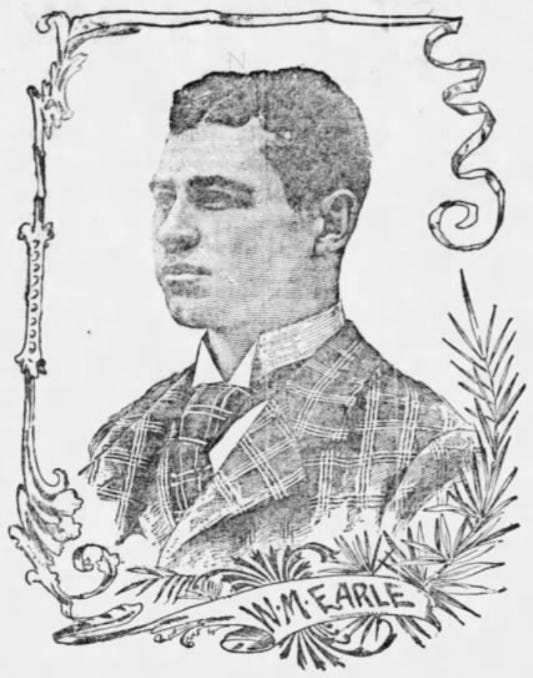
A few weeks ago I was invited to give my Billy Earle talk again, to the diehard Clyde Sukeforth Chapter of SABR. When it was over, the chapter president said, “That was a story.”
It is that. It’s also the deepest dive I’ve ever done on anybody. I think it’s fair to say I know more about Billy Earle than anyone else on earth at this point, and I have no regrets.
And, lucky us, my talk is posted on their YouTube page!
I get going around the 7:50 mark and wrap up around 44:30. It’s a great tale for a snowy night and I hope some of you will check it out, but mostly I’m just so happy it happened, happy it was recorded, and happy to finally be able to connect to it here on Project 3.18. Thanks again to Bruce McClure for inviting me and to everyone who attended.
Looking Back and Looking Forward
I’ve done a lot of work I’m proud of in 2025 but three stories stand out. Two of them are finished, and one is about to be.
A smoldering clash between the Braves and the San Diego Padres became one of the most popular stories here at Project 3.18. I also got to break it down with my friend Gordon on his Athlete Archives YouTube channel and our show has over 5,000 views which, according to my fingers, is a lot of views!
My next favorite story had everything, from an infamous fight with a fan to baseball’s first-ever organized strike to the most unlikely nine any club ever put out for a regulation game. The story of Ty Cobb, Claude Lucker, Al Travers, and the 1912 Tigers should be a prestige miniseries somewhere—we’ll make that a goal for 2026.

The third standout story began—as so many great tales do—with a color engineer. In 1939, an entrepreneur named Frederick Rahr dyed some baseballs yellow in the hopes of improving their visibility and somehow got them into actual National League games. How, I wondered, did he pull that off? It turns out that Rahr’s innovation was just the saffron tip of an iceberg of prewar baseball drama.
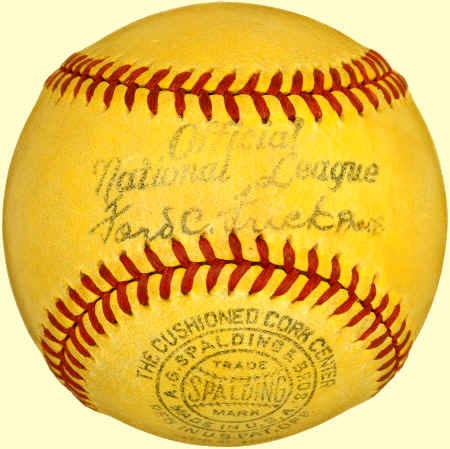
In the late 1930s volley after volley of brushbacks, dustoffs, and bean balls blistered the game’s reputation and hammered its stars. The story introduced Project 3.18 to Larry MacPhail, a bull-moose baseball pioneer with a knack for innovation and a seething hatred of beanballs.
It was MacPhail who put the yellow ball in play with his Brooklyn Dodgers, and it was MacPhail who, two years later, nearly got an opposing pitcher brought up on criminal charges after Brooklyn star Joe Medwick became the latest casualty. Even at the time, everyone recognized that all of this zaniness was skirting the most obvious solution to the problem of head injuries: a helmet.
And that was where we left the story, until now. Let’s finish 2025 in 1941, when, under another hail of bean balls, Larry MacPhail introduced the “Brooklyn Safety Cap” (patent pending).
I’m going to do something a little different with this story to make sure it’s all wrapped up before the holidays. I’ll release smaller (for me) installments on Mondays AND Thursdays for the next two weeks.
As always, I’ll include the most important breadcrumbs, but if you’d like to check out the stories that got us here:
Part I:

Part II:

Thank you for spending time with Project 3.18 (and with Ted and I and our Clear the Field podcast) this year. And THANK YOU for your encouragement, support, and helping others find this strange little corner of the Internet. It is such a gift to do what I love and bring baseball history to life in these stories, but the greatest gift of all is knowing there are people hanging on for the ride, wherever (and whenever) it goes.
See you Monday.
Podcasts are good - don't stop unless absolutely necessary.
Loved the interview & waiting on your book Paul. Thanx for what you do. Fascinating!! ⚾️🥎